Discover 3 powerful mindset shifts from Kenjutsu—the art of classical Japanese swordsmanship—that can help musicians, creatives, and coaches master fear and stay grounded under pressure.
Fear is part of every creative journey.
Whether you’re stepping on stage, launching a new project, or guiding others through transformation, fear has a way of showing up right at the edge of our growth. As a musician, educator, and coach, I’ve met fear in many forms—performance anxiety, imposter syndrome, and the deep resistance that arises before big life changes.
But it was kenjutsu, the classical Japanese art of swordsmanship, that gave me the most surprising tools to navigate it.
Since 2012, I’ve trained in this powerful martial tradition—and the lessons I’ve learned from facing an opponent with a wooden blade have reshaped how I deal with fear, both in the training hall and in life.
Here are three of those lessons—and how you can apply them to your own creative path.
1. Don’t Eliminate Fear—Stand with It
Kenjutsu teaches that fear is not the enemy—it’s the teacher.
In combat, regardless of the martial tradition you are practicing, backing away from fear leads to mistakes. You flinch, you freeze, you get cut. But the warrior learns to stay rooted—to let fear be present without surrendering to it.
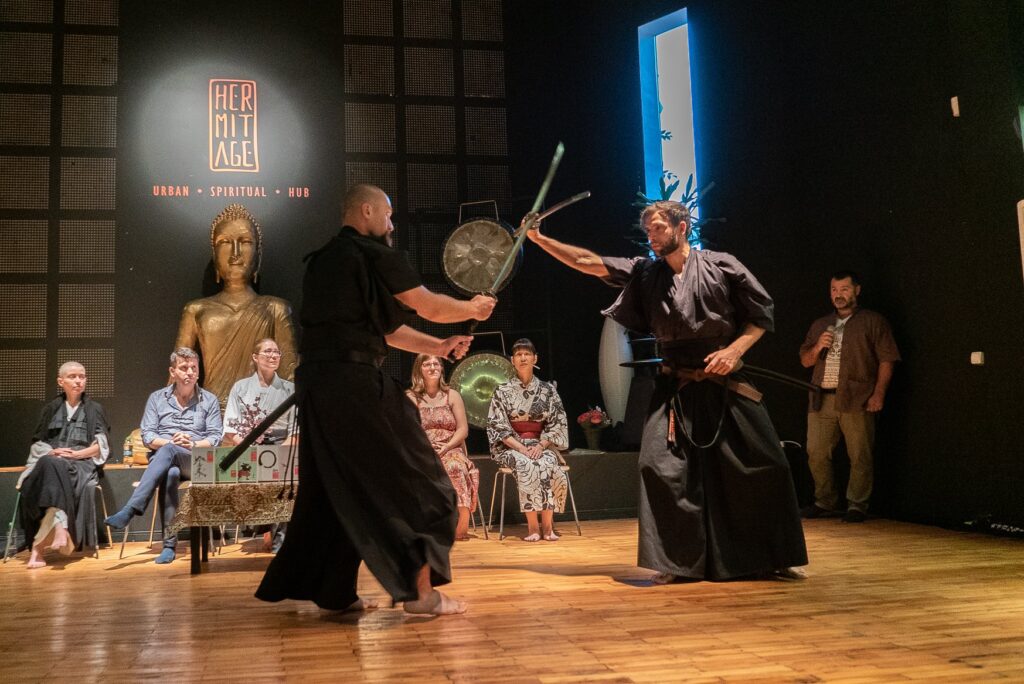
As musicians, coaches, or creators, we often try to push fear away: “I shouldn’t feel this nervous”, or “I have to be confident”. But fear isn’t a flaw—it’s feedback.
Mindful Musician Takeaway:
Next time fear shows up before a performance or a big decision, try this:
Pause
Breathe.
Feel your feet.
Let the fear be there, but don’t surrender your sword to it.
2. Reacting Is Easy. Responding Takes Mastery
Two of the core principles in kenjutsu are maai—which roughly translates as the awareness of distance and hyoshi, which is more or less about rhythm and timing. Sometimes the best response is to wait. Not from fear, but from presence.
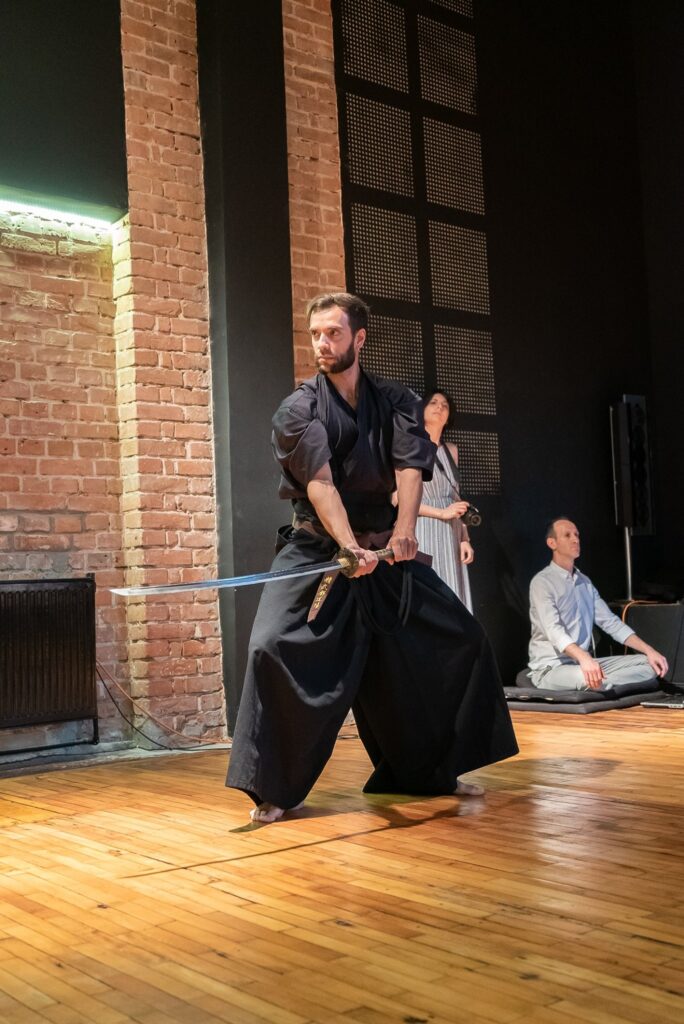
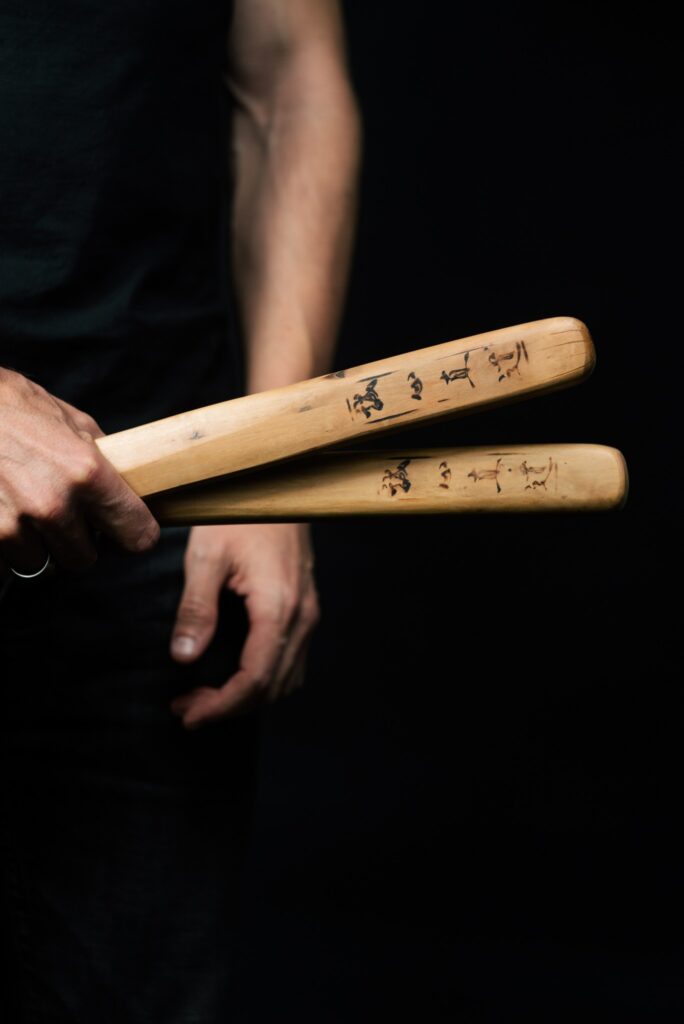
In a duel, a rushed reaction leads to defeat. In life, it can lead to burnout, conflict, or saying yes when we mean no.
Mindful Musician Takeaway:
When fear triggers a quick reaction—like canceling a show, avoiding feedback, a difficult conversation, or doubting yourself—ask: “What would a grounded version of me choose here?”
Train the pause. That’s where true mastery lives.
3. Train for that moment you hope never comes
The samurai of old Japan trained for deadly encounters they most likely hoped would never happen. Why? So they wouldn’t freeze when the stakes were high.
You and I may not face life-or-death situations, but we do face emotional risks that feel just as intense in our mind and body.
The stage. The hard conversation. The big leap or change in life.
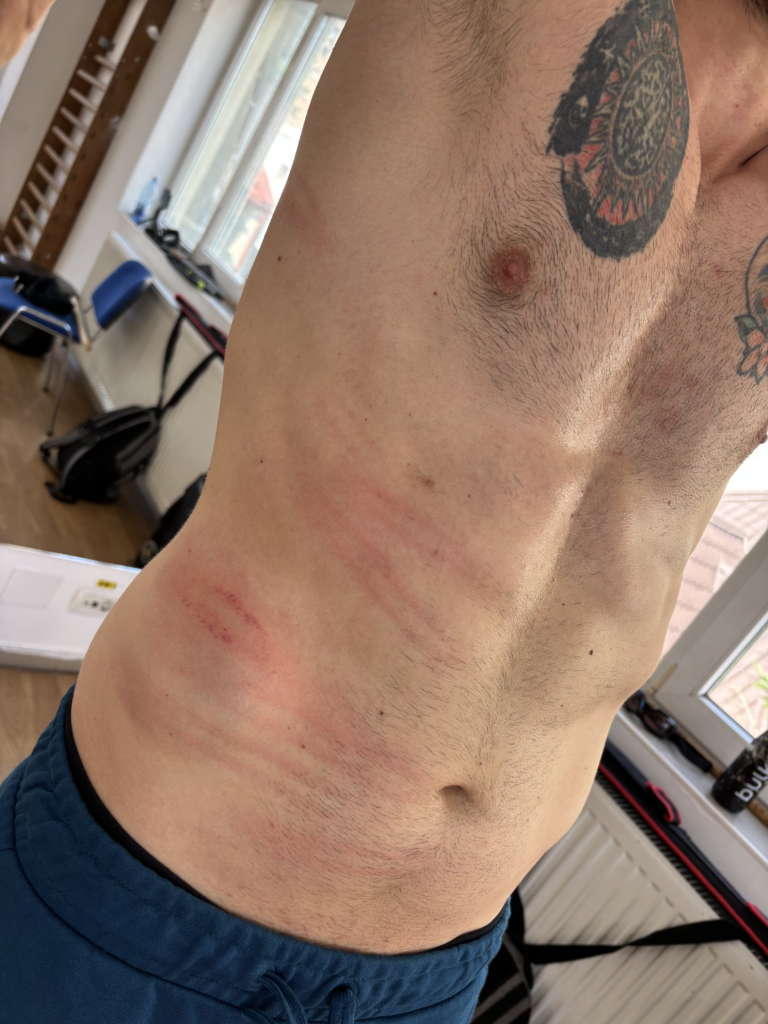
Kenjutsu and even more so filipino martial arts, through a specific form of training meant to keep you going while being exposed to pain, have taught me that preparation isn’t just about skill—it’s about nervous system resilience. I apply the same logic when preparing musicians in their general approach to playing, for live shows or clients for high-stakes moments: Practice under pressure. Accept the pain. Breathe through it. Simulate it safely.
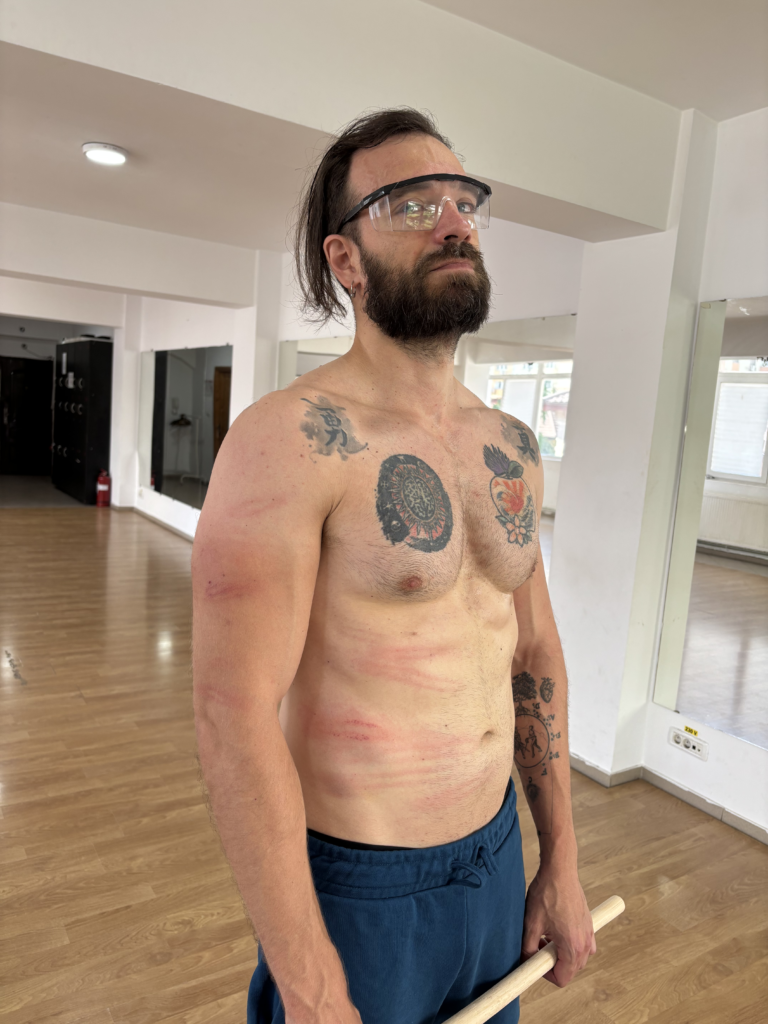
Mindful Musician Takeaway:
Rehearse what you fear. Not obsessively—but with kindness. Accept your possible mistake without stopping mid playing to accuse it and complain. Play that hard piece in front of a friend. Practice saying no in the mirror. Prepare yourself, not just your skill.
Closing Reflection:
Fear is like a sword and the sword is a tool. It can protect, sharpen, or paralyse—it depends on how you decide to hold and use it.
Kenjutsu taught me that fear isn’t something to defeat. It’s something to dance with—intimately, intentionally, and with presence. As a mindful musician, your edge isn’t where fear ends. It’s where your awareness begins.
Do not fear death. (Miyamoto Musashi)