Barre chords are a rite of passage. They’re also the first major frustration point for most guitarists.
Your fingers hurt. Your wrist cramps. F major feels like your mortal enemy. And part of you starts to wonder: Maybe I’m just not built for this.
That’s a lie. You are. The problem isn’t you. It’s your approach—and your body’s way of telling you something’s not working.
Let’s fix that. Here are the real reasons barre chords hurt and how to solve them without giving up, forcing it, or wrecking your motivation.
🧠 Pain isn’t a sign of weakness. It’s a signal.
In guitar, just like in martial arts or strength training, pain shows up when your system gets overloaded. Muscles, joints, tendons—they all have limits. And when your technique ignores body mechanics, your body pushes back.
Most barre chord pain comes down to two root issues:
Excess tension
Poor alignment
Over-gripping the neck. Bending the wrist too far inward. Collapsing your thumb behind the neck.
These aren’t signs of “working hard.” They’re signs of inefficient movement.
And inefficient movement = unnecessary pain.
🥋 What most teachers don’t teach: Relaxation = Efficiency
In kenjutsu and Filipino arnis, we don’t grip the sword, stick or knife to fight it. We align with it. The same principle applies to guitar. Force is rarely the answer. Alignment. Breath. Economy of effort. That’s where real power lives.
Here’s a quick recalibration:
Exhale as you apply the barre. Let breath guide tension release.
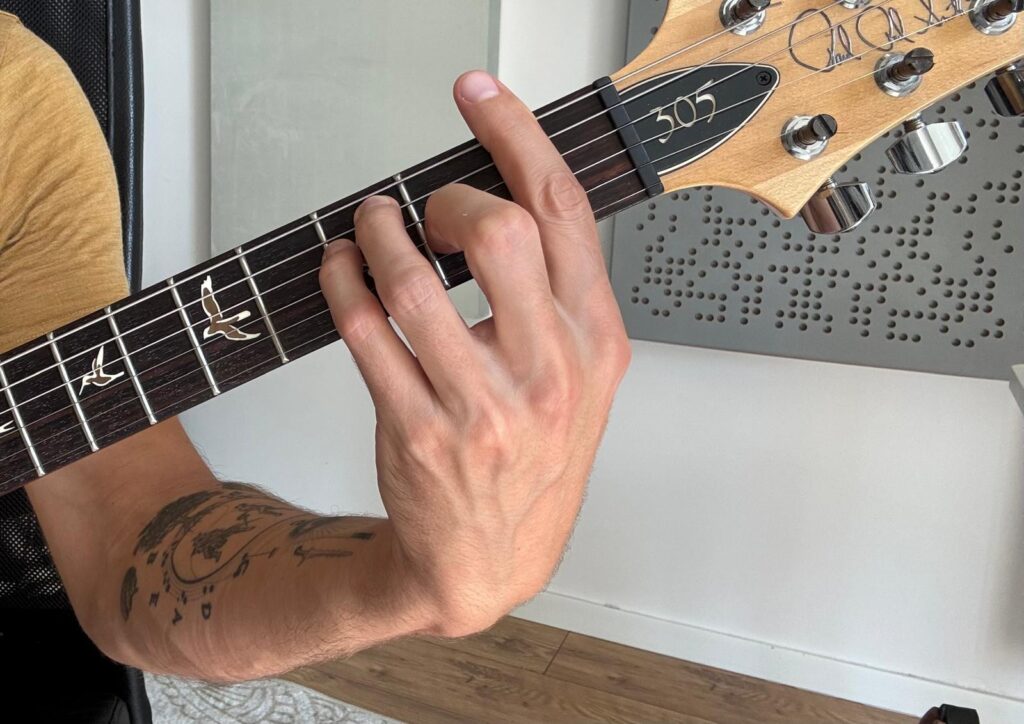
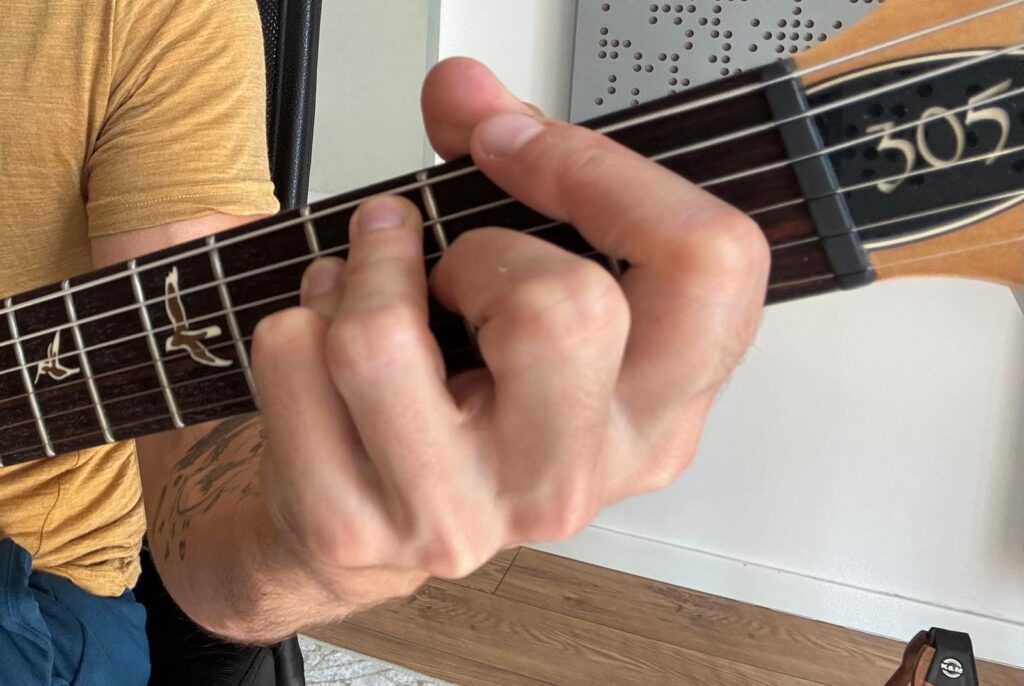
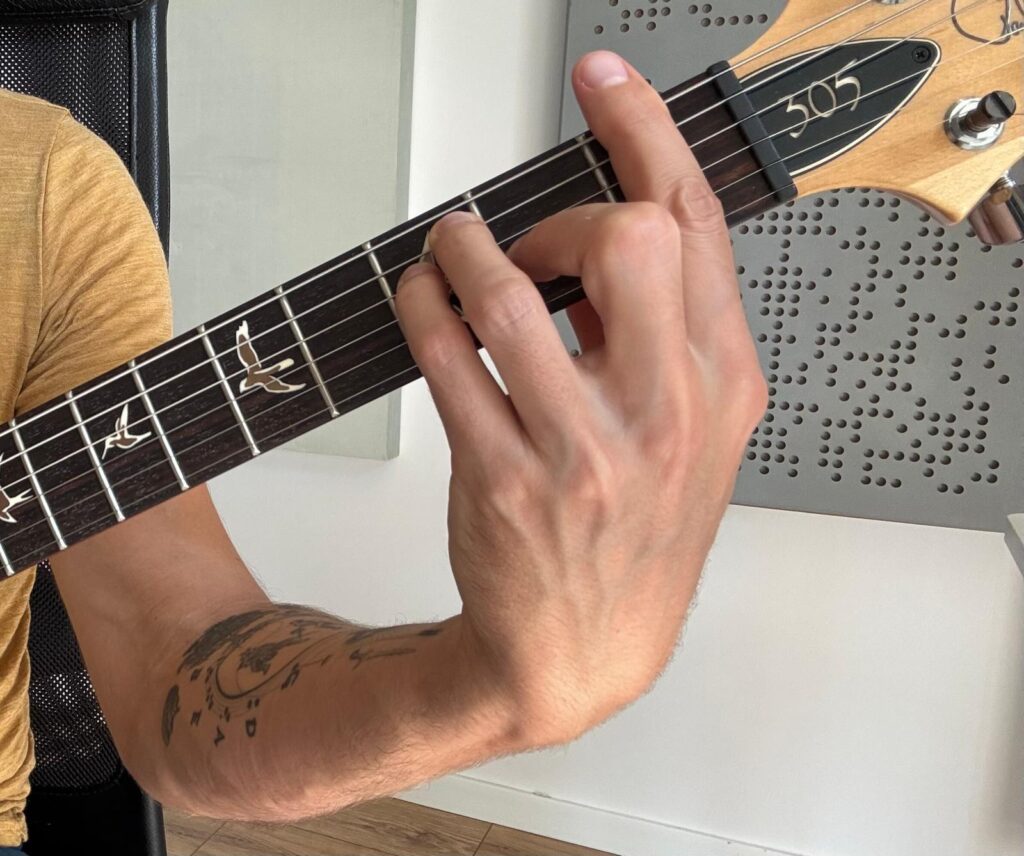
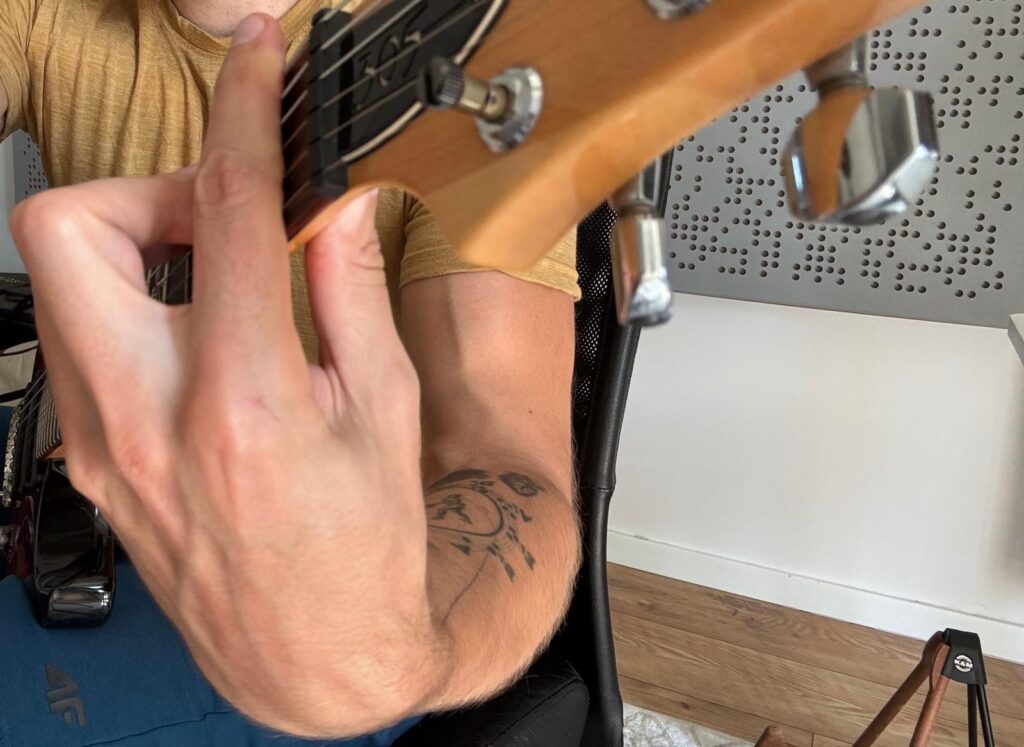
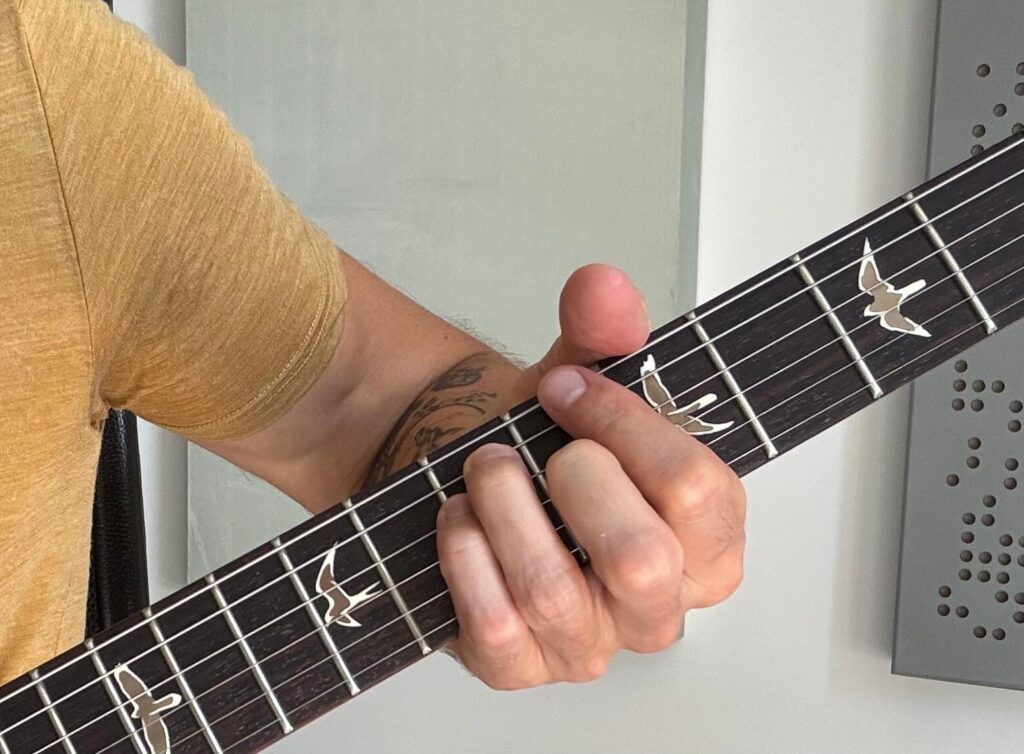
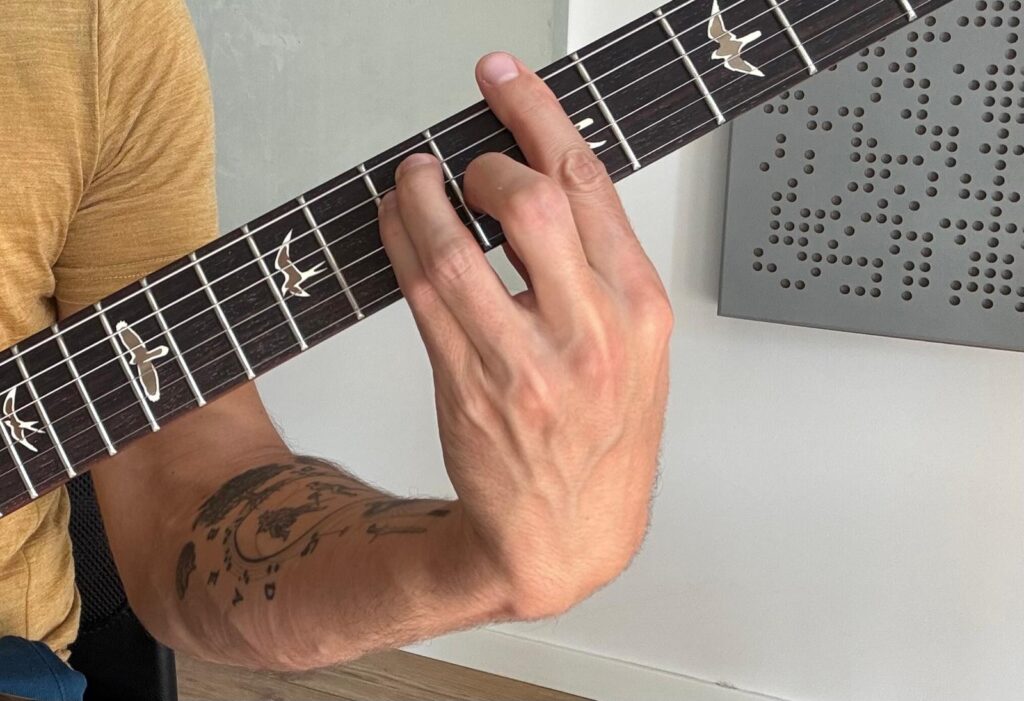
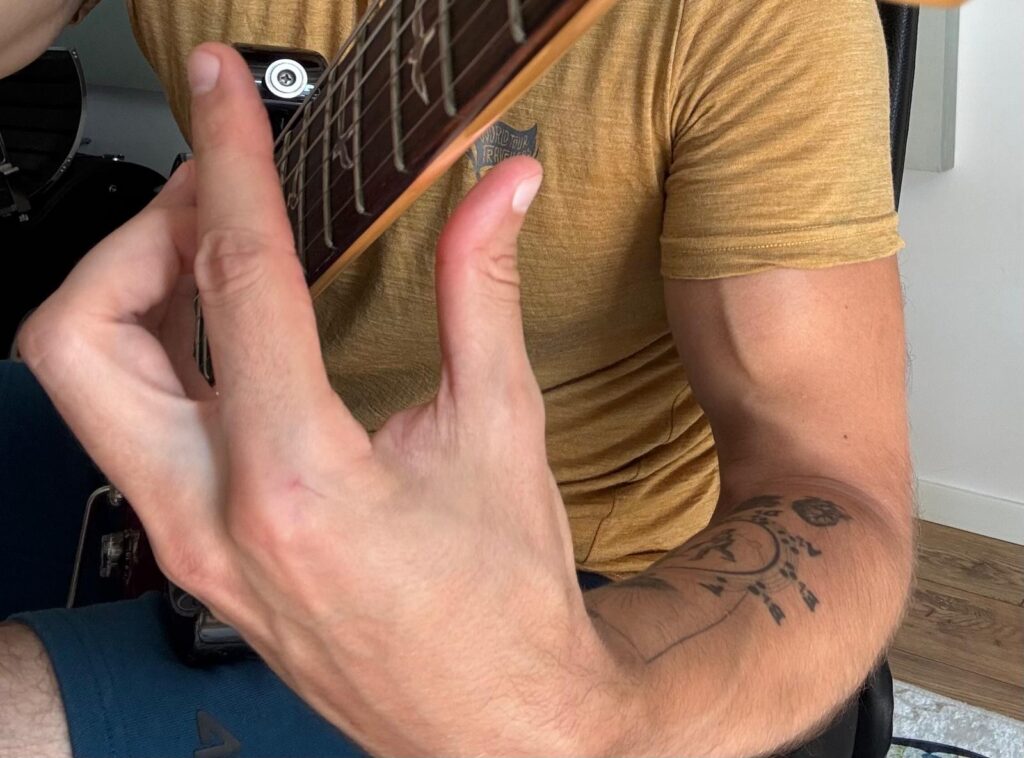
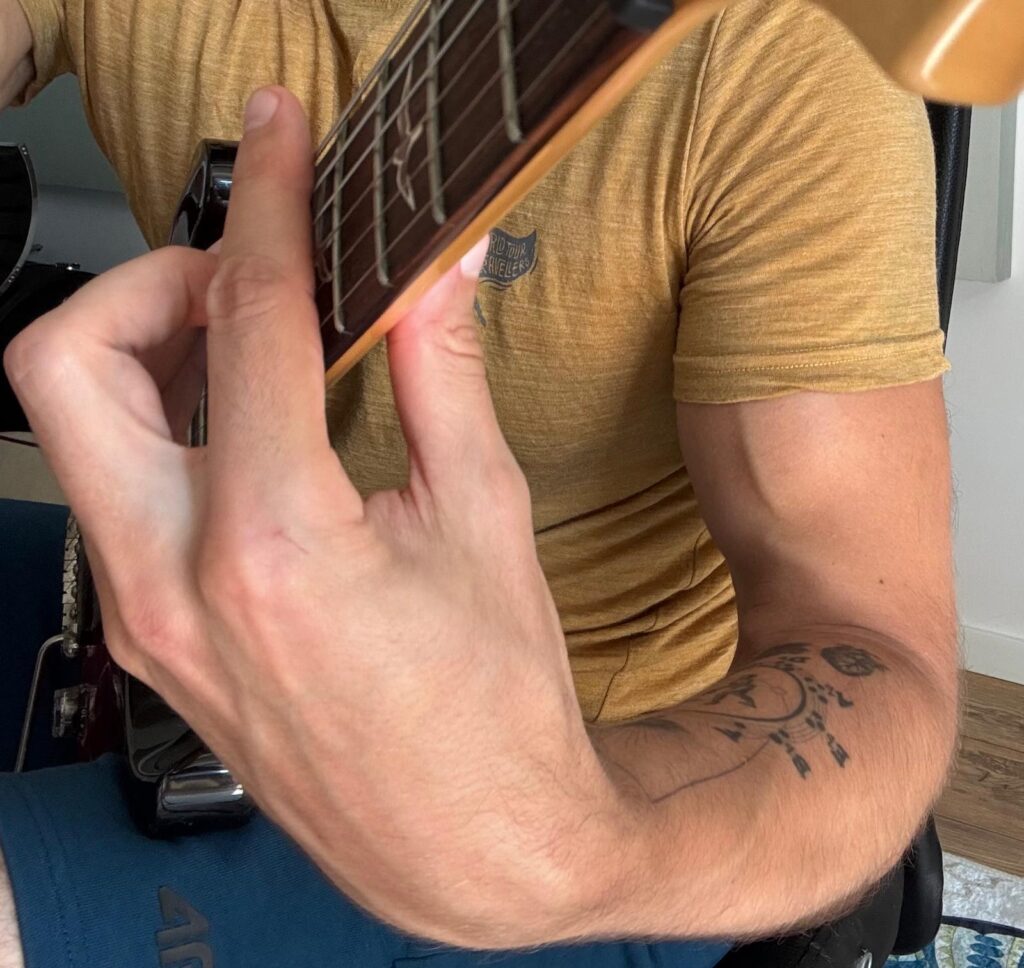
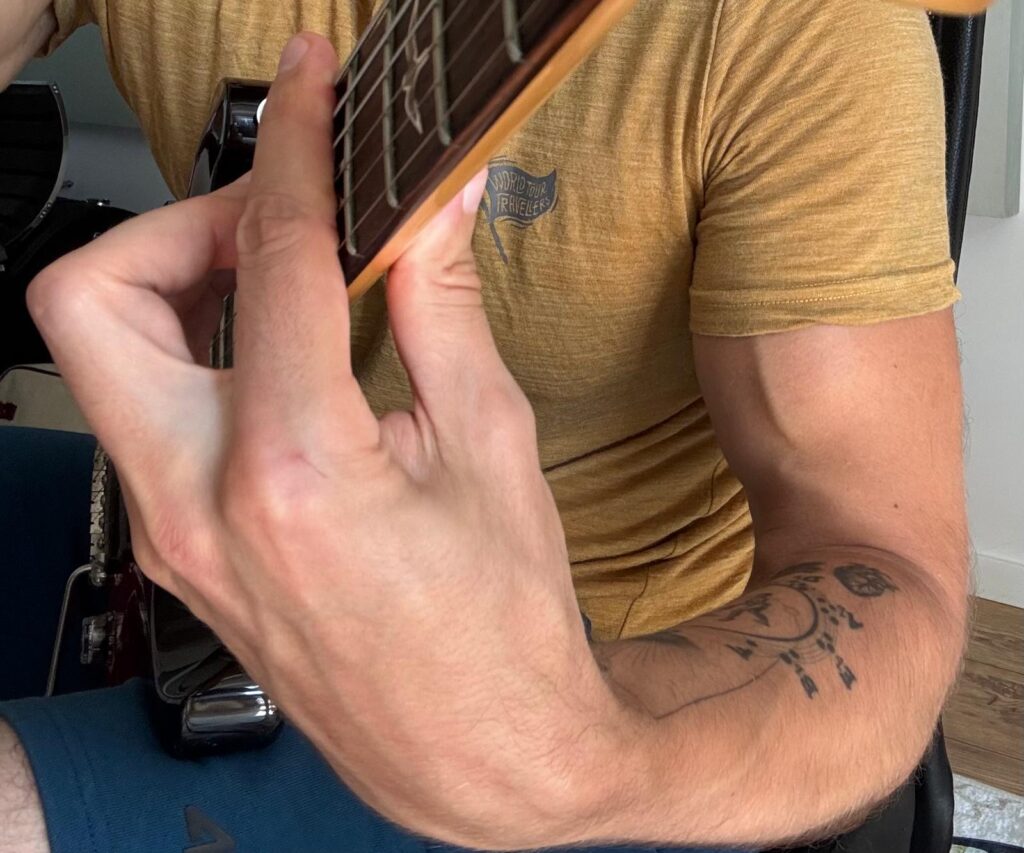
Focus on knuckle contact, not the fingertip. Your index finger’s first joint is the leverage point.
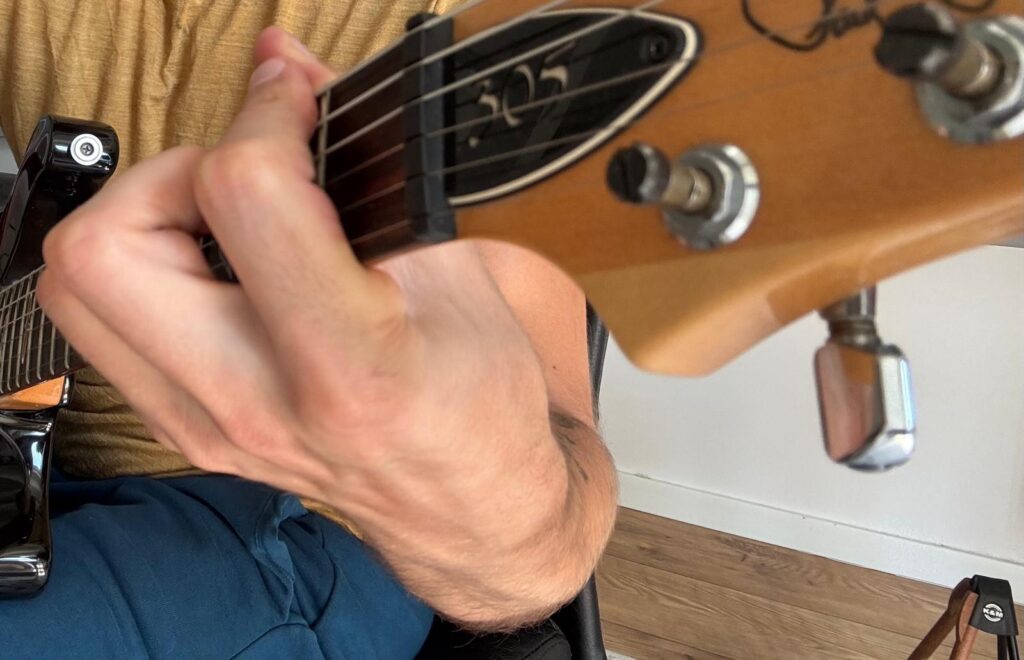
Hug the neck, don’t press against it. Let your hand wrap with intention, not strain.
Sound too subtle? No problem – test the barre until all your notes start to ring while your hand looks like the image below. It will take some time, so have patience.
🔧 3 Pain-free fixes you can use today
These aren’t hacks. They’re biomechanical principles that actually work.
1. 🎯 Use gravity, not force
Let your elbow drop. Literally. Most players lift the shoulder, engage the traps, and create upper body tension without realizing it. Let gravity help you.
➡️ This instantly relieves pressure in your wrist and creates a more natural angle for your barre.
2. 🧘 Practice “Floating barres”
Place your barre lightly. Don’t press yet. Strum muted strings while keeping your hand relaxed. Then gradually add pressure in small doses. Think layers, not slamming all your weight in at once.
➡️ This builds tactile awareness—and teaches your hand what “enough” really feels like.
3. 🧠 Strengthen with intent
Finger strength matters, yes—but not at the cost of alignment. Doing brute-force grip exercises before you fix your posture is like strengthening bad form in a deadlift. You’ll get stronger… and hurt.
➡️ Fix the form. Then isolate the fingers with calm, precise drills.
🌀 Mental reframe: You’re not behind. You’re just new.
Here’s the mindset shift I give every frustrated student:
“I’m not failing barre chords—I’m learning a skill my hand has never done before.”
This isn’t motivational fluff. It’s how neuroplasticity works. Your hand, wrist, and brain are building a new language of coordination. And just like in therapy, meditation, or martial arts kata—rushing the form kills the form.
You don’t need to “master” this today. You just need to stay in the process.
✅ Final thoughts: Precision over pressure
Barre chords aren’t evil. They’re just misunderstood.
Most of the pain you feel is preventable. And most of the progress you want is on the other side of one simple shift:
→ Play smarter, not harder.
With better body alignment, a clear mindset, and practice that respects your anatomy, barre chords become way more doable and way less scary.
🔁 Your turn
What’s your biggest barre chord struggle right now?
Finger pain?
Buzzing strings?
Wrist tension?
Drop a comment or reach out and let’s troubleshoot it together. You’re not alone. And you’re definitely not broken.