When people think of martial arts, they picture speed, strength, and precision—maybe even flashy movie fight scenes.
What they don’t usually picture is healing.
Yet, over the years, I’ve seen martial arts training—whether with a wooden sword in kenjutsu or a rattan stick in Balintawak—quietly help people process anxiety, navigate trauma, and reclaim a sense of safety in their own skin.
I’m not saying martial arts are a replacement for therapy (because it isn’t). But I am definitely saying, from my own experience, that it can be a surprisingly powerful ally to anyone wanting to build a strong mind, in a strong body and a healthy relationship with themselves, their emotions and other people.
1. The body remembers—So the body must be involved
Anxiety and trauma aren’t just “in your head.”
They live in your nervous system—how you breathe, how you stand, how quickly your muscles tense without you noticing and what you are telling yourself.
Martial arts training provides a safe, structured way to re-engage with your body.
Learning to move with balance, to breathe under pressure, to gradually respond instead of flinch—these are physical lessons that ripple into mental space.
I’ve seen people who once froze when startled, begin to move fluidly through sparring drills, as their reflexes were no longer dictated by fear.
2. The power of ritual and structure
Trauma often creates chaos inside your mind and body.
Martial arts offer the opposite: a clear structure, familiar rituals, and predictable rhythms.
Bowing in before practice, repeating kata or patterns, following the etiquette—these aren’t just “traditions.” They’re grounding anchors.
They remind you: You know where you are. You know what’s next.
That kind of predictability can feel like a lifeline for someone living with anxiety.
3. Controlled stress, safe release
In training, we intentionally create gradual doses of stress—in sparring, timed drills, partner attacks—but in a space where it’s safe to explore those reactions.
This is where the magic happens:
You face adrenaline without danger, and over time, your nervous system learns, I can feel this and still be okay.
Many people have told me they feel calmer in daily life because their body has “practiced” staying centered under pressure.
4. The community effect
Healing from anxiety and trauma can be lonely work.
Martial arts schools often become unexpected communities, bound by a spirit of camaraderie —places where you’re seen, supported, and respected for showing up, not for being perfect.
That shared training, the laughter between drills, even the small victories—these moments remind people they’re not broken, just human.
5. Why it works alongside therapy
I’ve worked with folks who were also in psychotherapy, and the combination was powerful.
Therapy gave them tools to process their experiences; martial arts gave them a living laboratory to embody those tools.
For some, therapy opened the mind and body and martial arts helped open the body to another level. Together, they created a bridge toward feeling whole.
Final Thought
Martial arts won’t “fix” anxiety or trauma.
But they can give you something just as important: a way to reclaim your body, your breath, and your place in the world.
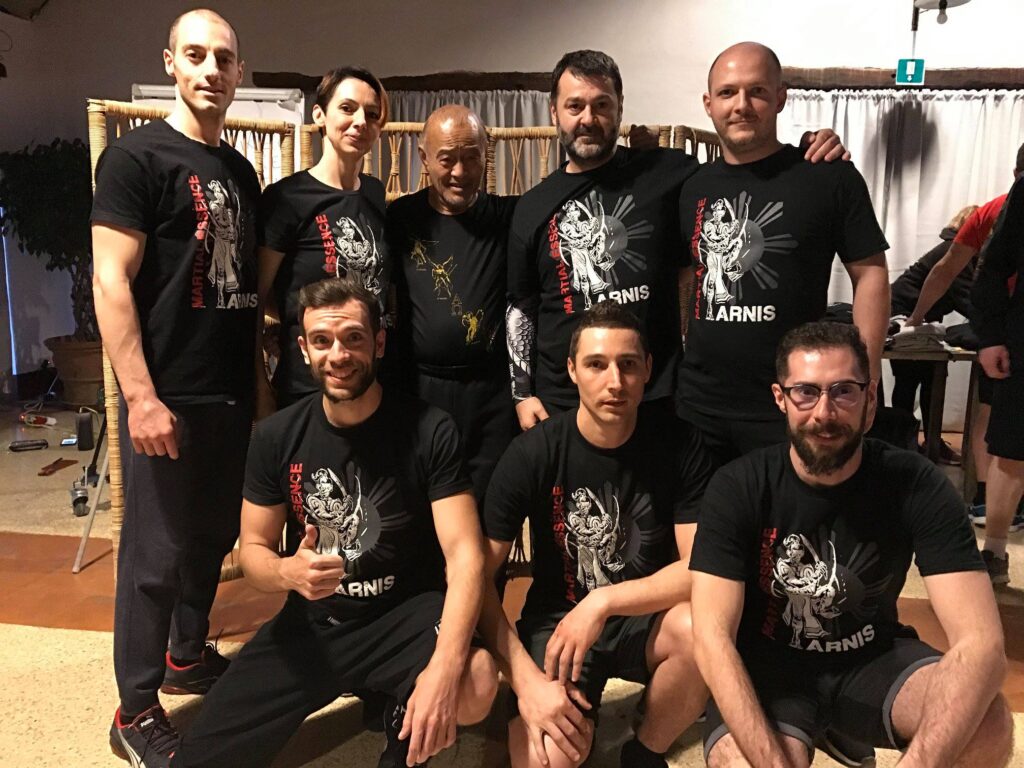
If you’re on that journey, find a school or teacher who values safety, respect, growth and patience over ego and remember—every bow, every breath, every strike is a step toward feeling at home in yourself again.