Slow is Smooth, Smooth is Fast: Guitar Lessons from the Sword
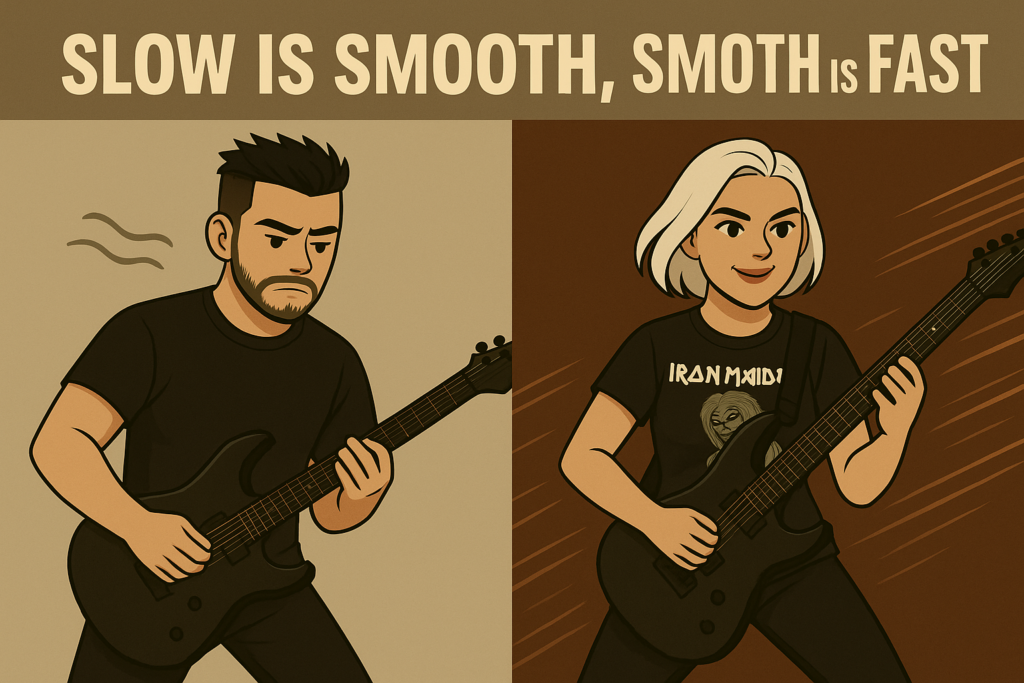
Everyone wants to play fast.
But both the sword and the guitar teach the same truth:
speed isn’t something you chase — it’s something that appears when the movement is smooth.
Start painfully slow.
Make the motion beautiful.
Add tempo like adding weight in the gym.
Because in music and in combat:
Power comes from calm.
Speed comes from smoothness.
Show up slow today.
You’ll be fast tomorrow.
Inamicul Invizibil: Cum să scapi de obiceiurile nefolositoare la chitară
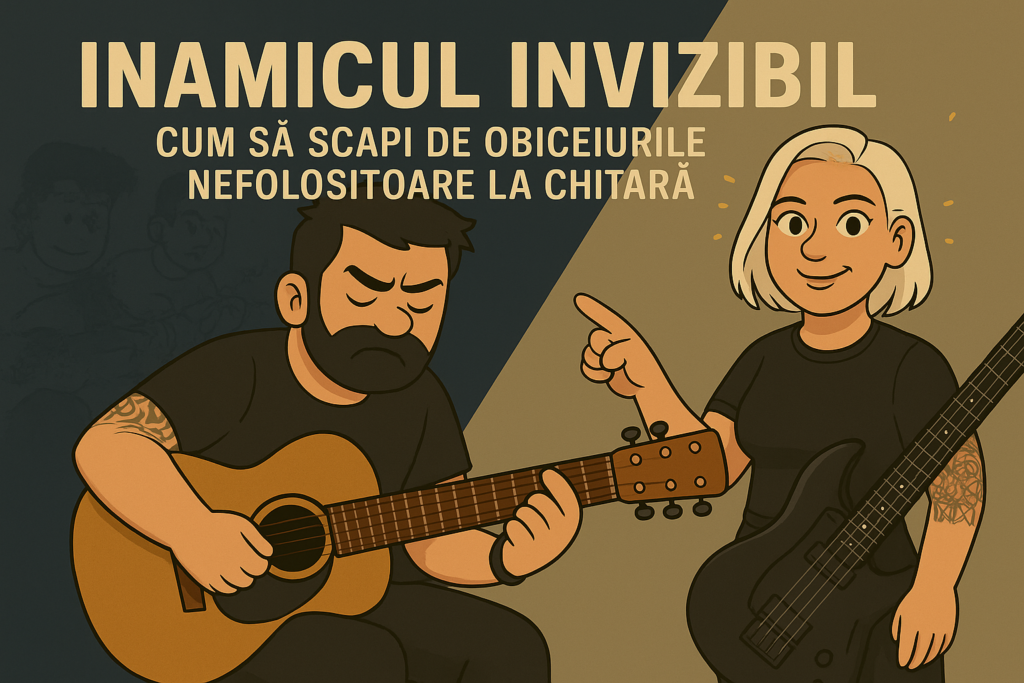
Cele mai periculoase obiceiuri nu se aud — se simt.
Un umăr încordat, o mișcare grăbită, o tensiune pe care nu o observi.
Așa cum un luptător pierde într-un singur moment de neglijență, un chitarist ajunge să se blocheze dintr-un gest repetat fără atenție.
Remediul nu e pedeapsa, ci conștientizarea.
Observă, respiră, corectează – doar așa începi să deții controlul.
The Invisible Enemy: Breaking Bad Habits on Guitar
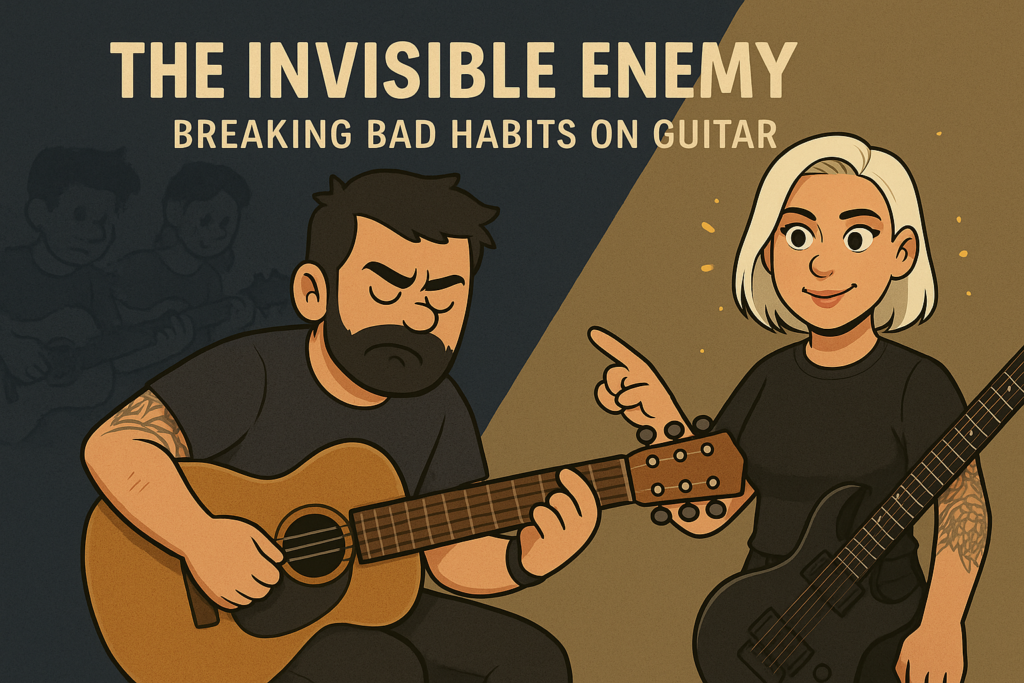
The worst habits aren’t loud — they’re invisible.
A little tension here, a sloppy motion there, and before you know it, you’re fighting your own body.
Like a swordsman leaving his guard open, every unnoticed flaw becomes an invitation to struggle.
The cure isn’t punishment — it’s awareness.
Shine light on what you do without thinking, and mastery begins.
Disciplina Bate Inspirația: Cum Să Te Antrenezi La Chitară Ca Un Războinic
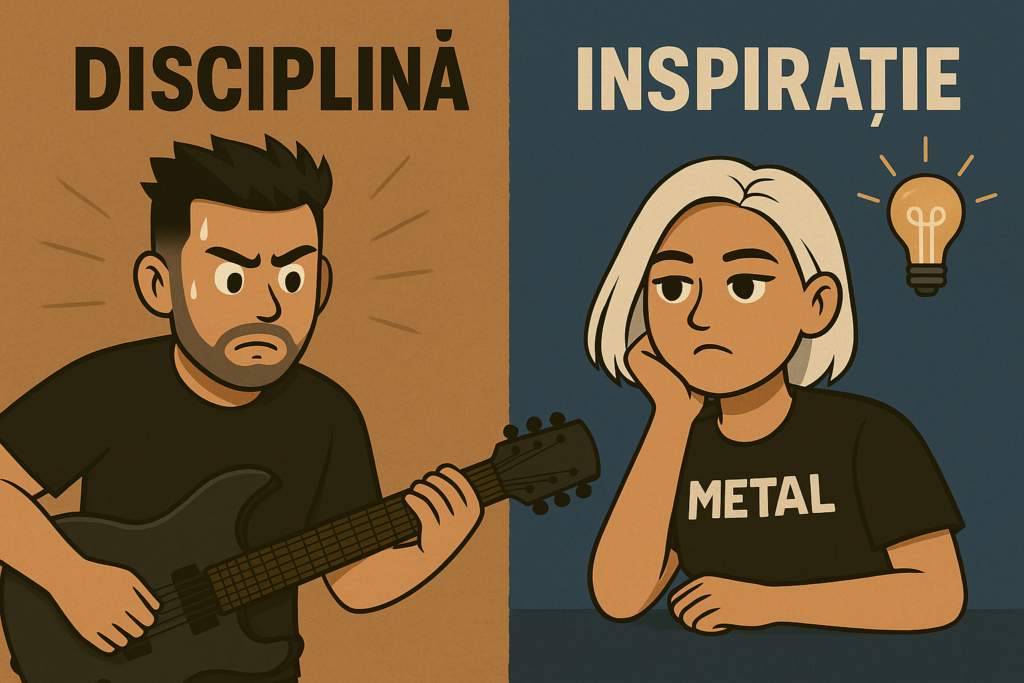
Majoritatea muzicienilor așteaptă inspirația — războinicii nu.
Nu poți construi măiestrie din stări de spirit, ci din ritm.
Prezintă-te chiar și modest, dar prezintă-te zilnic.
Pentru că disciplina nu este opusul libertății, ci este drumul care o face posibilă.
Discipline Beats Inspiration: Practicing Guitar The Warrior’s Way
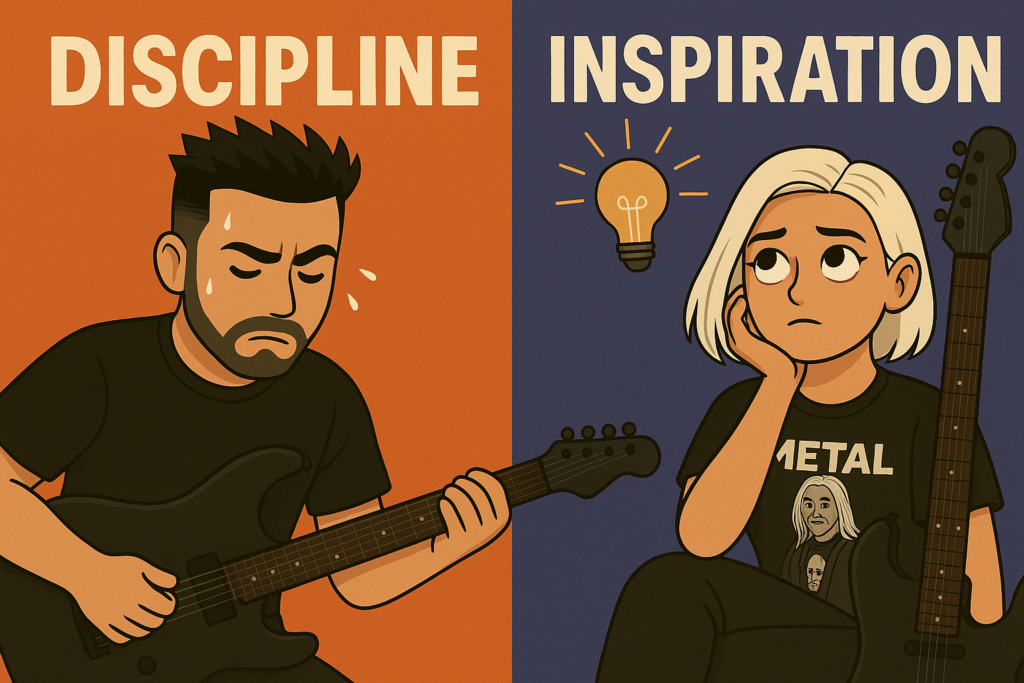
Most musicians wait for inspiration — warriors don’t.
You can’t build skill on moods. You build it on rhythm.
Show up small, but show up daily.
Because discipline isn’t the opposite of freedom —
it’s the path that makes freedom possible.
Cutting Through the Noise: A Samurai’s Approach to Music Theory
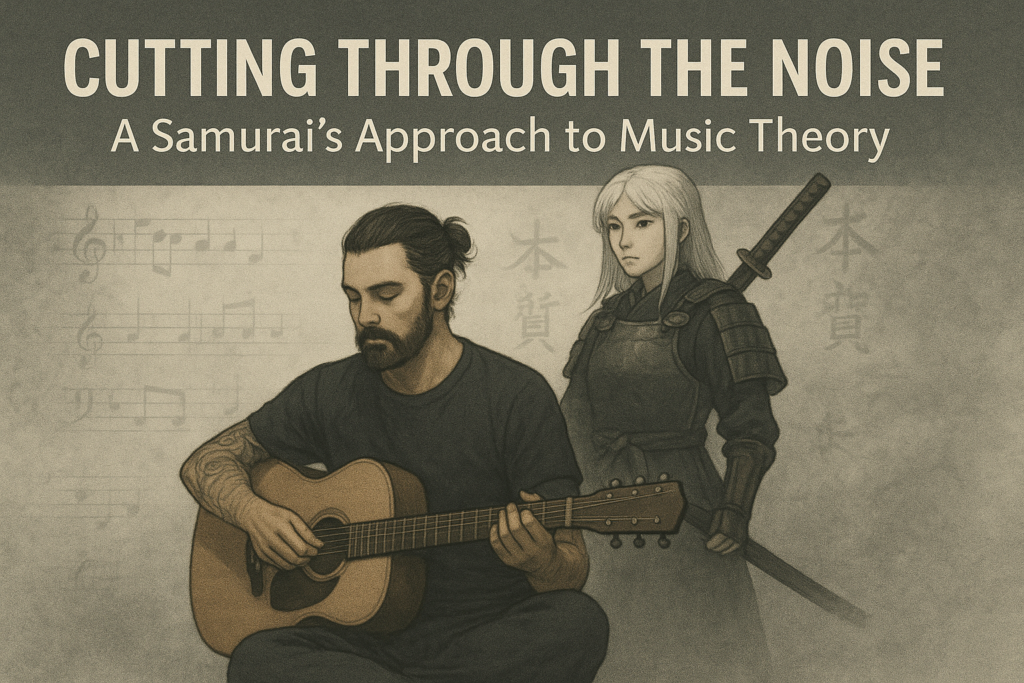
Most musicians drown in theory they never use.
Scales, modes, formulas — the noise keeps growing.
But Musashi taught: see the essence, discard the extra.
Music isn’t about knowing everything.
It’s about cutting through — until only sound remains.
Tăind prin zgomot: O abordare de samurai asupra teoriei muzicale
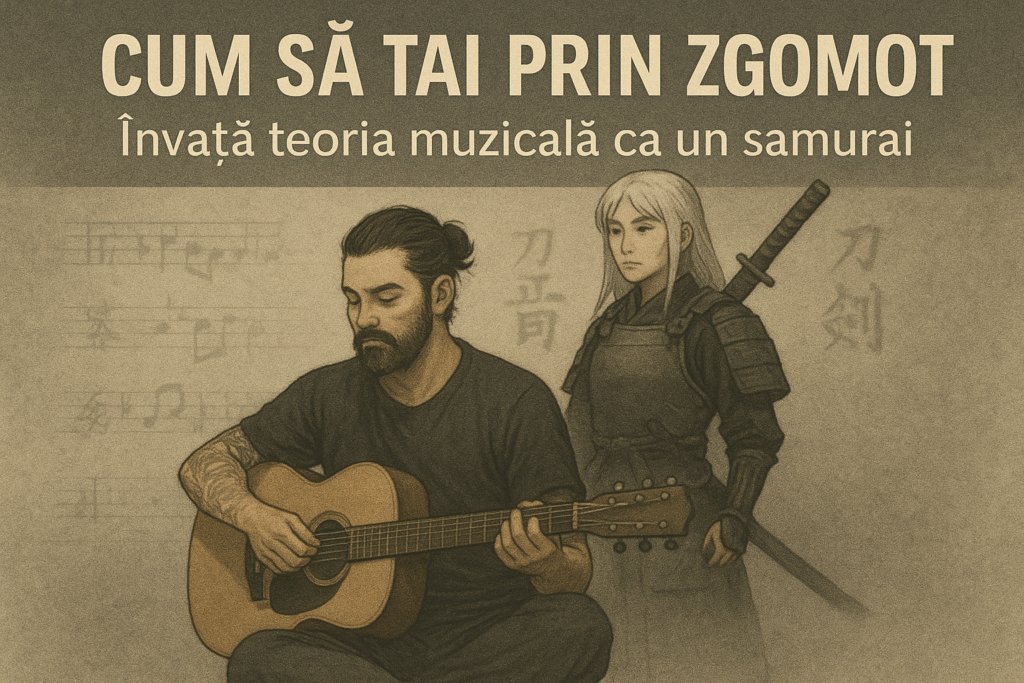
Cei mai mulți muzicieni se îneacă în teorie pe care n-o folosesc niciodată.
Game, moduri, formule — zgomotul tot crește.
Dar Musashi spunea: vezi esența, aruncă restul.
Muzica nu e despre a ști totul.
E despre a tăia până când rămâne doar sunetul.
🎸 Finding Your Pulse: The Hidden Martial Rhythm of Guitar

Most guitarists struggle more with rhythm than notes — because rhythm isn’t something you see, it’s something you feel.
Just like in kenjutsu or Balintawak, where breath and footwork control timing, your guitar playing needs the same internal pulse.
Count, tap, breathe — and let rhythm become the heartbeat of your music.
🎸 Găsește-ți pulsul: Ritmul marțial ascuns al chitarei
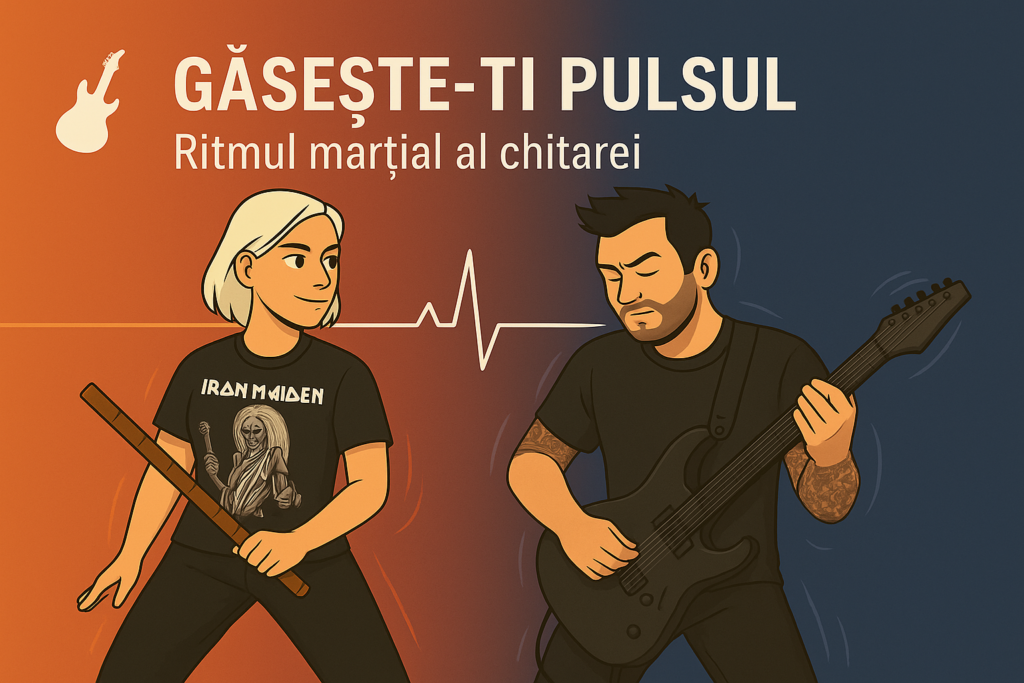
Mulți chitariști aflați la început de drum, cred că problema sunt notele, dar de fapt ritmul e cel care le scapă printre degete.
La fel ca în Kenjutsu sau Balintawak, respirația și mișcarea funcționează în același timp.
Numără, bate din picior, dă din cap, respiră — și lasă-ți corpul să găsească pulsul.
De la Stângăcie la Fluiditate: Acordurile de Chitară = Meditație în Mișcare
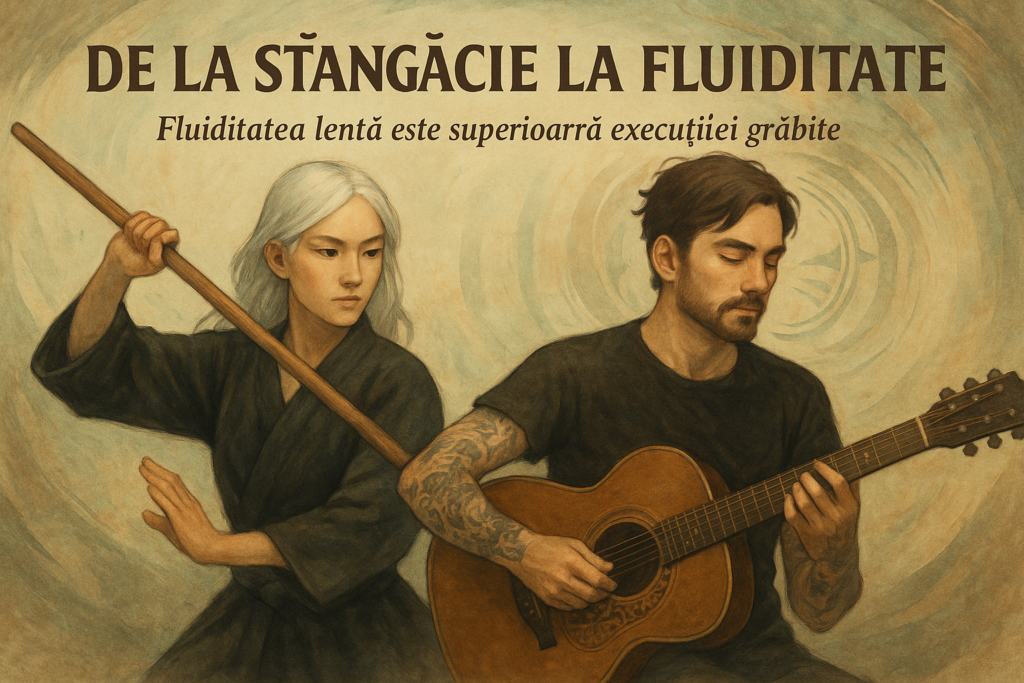
La început totul pare imposibil.
Degetele se încurcă, acordurile sună ciudat, iar mintea aleargă mai repede decât mâinile. Dar, la fel ca într-un kata de arte marțiale, repetiția transformă stângăcia în grație. Când renunți la grabă și alegi prezența, mișcarea devine meditație, iar fluiditatea apare de la sine.
From Clumsy to Fluid: Guitar Chords as Moving Meditation
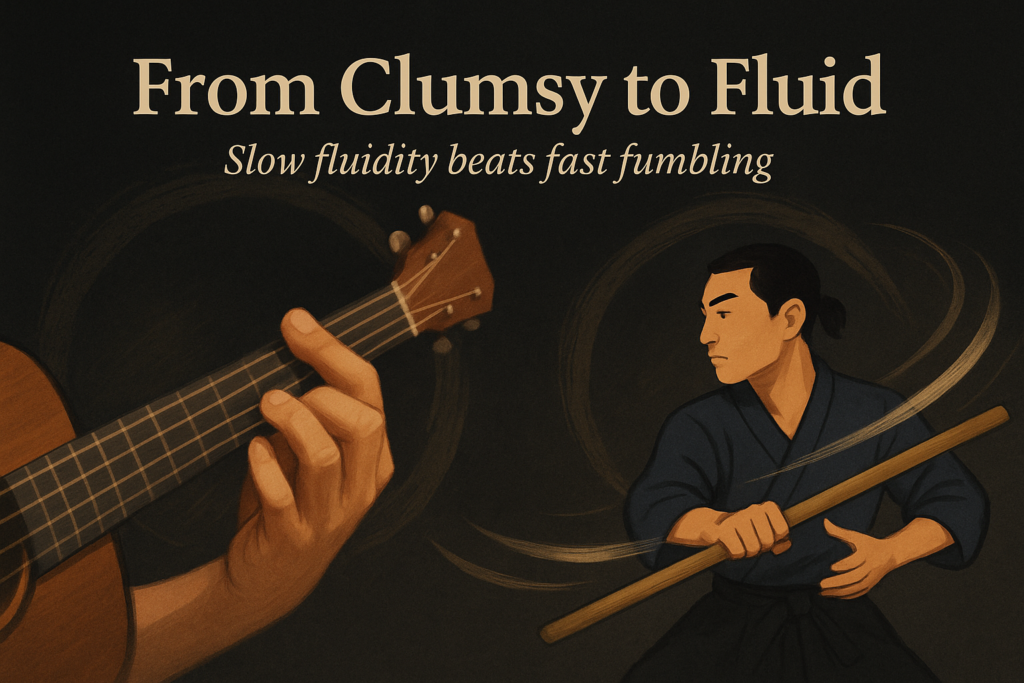
At first, everything feels impossible.
Your fingers stumble, the chords buzz, and your mind races ahead of your hands. But just like a kata in martial arts, repetition turns stiffness into grace. When you let go of hurry and focus on presence, movement becomes meditation — and fluidity begins to appear on its own.
Bătăturile și Sabia: Durerea este ghidul, nu dușmanul
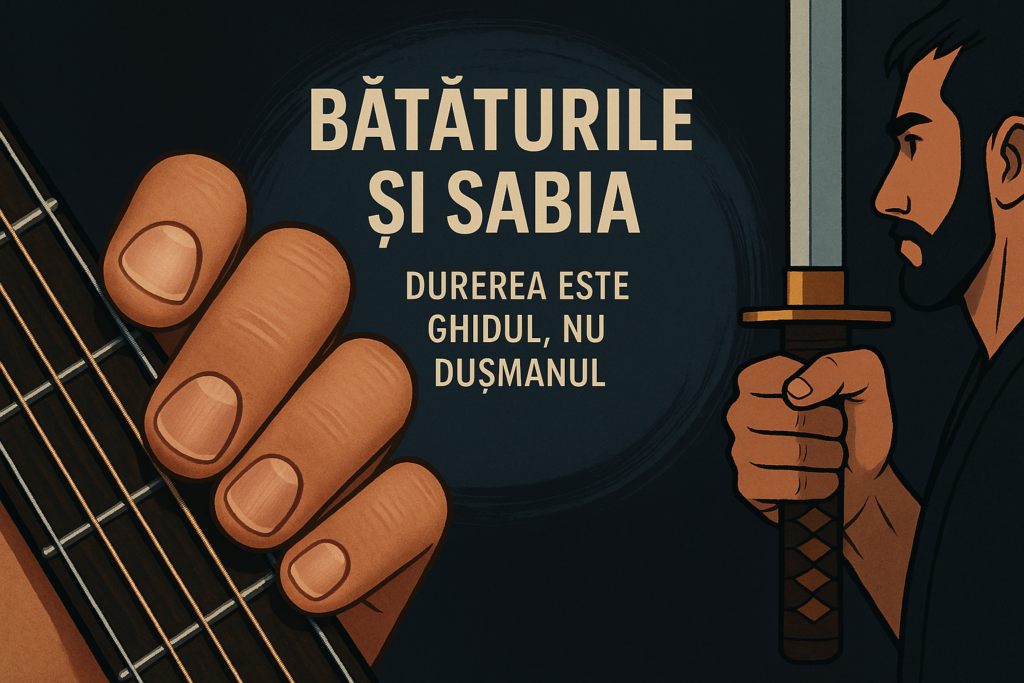
Durerea nu este dușmanul — este lecția.
De la bătăturile de pe vârfurile degetelor chitaristului la vânătăile din antrenamentul unui artist marțial, disconfortul marchează drumul creșterii. Cheia este să înveți să vezi durerea nu ca pe o pedeapsă, ci ca pe dovada că evoluezi.