The Sound.
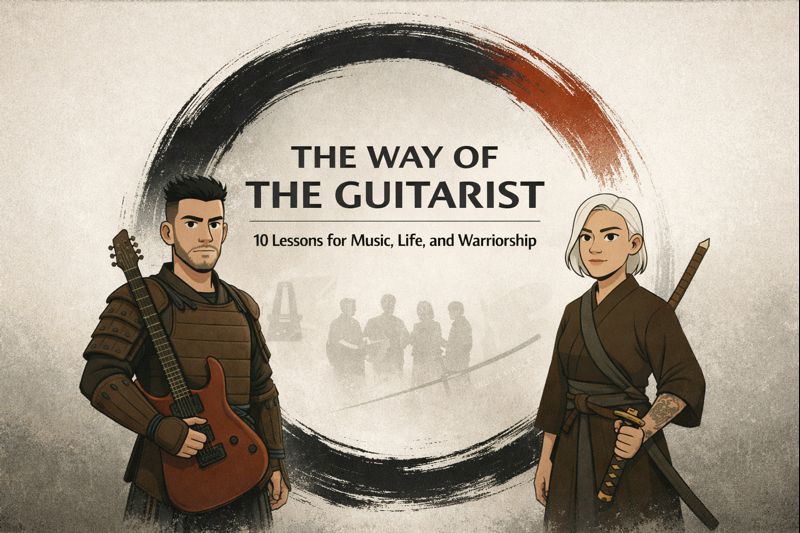
The Way of the Guitarist: 10 Lessons for Music, Life and Warriorship
Playing guitar is not only about mastering notes — it’s about mastering yourself. These ten lessons map a path from mechanical playing to conscious, courageous music-making.
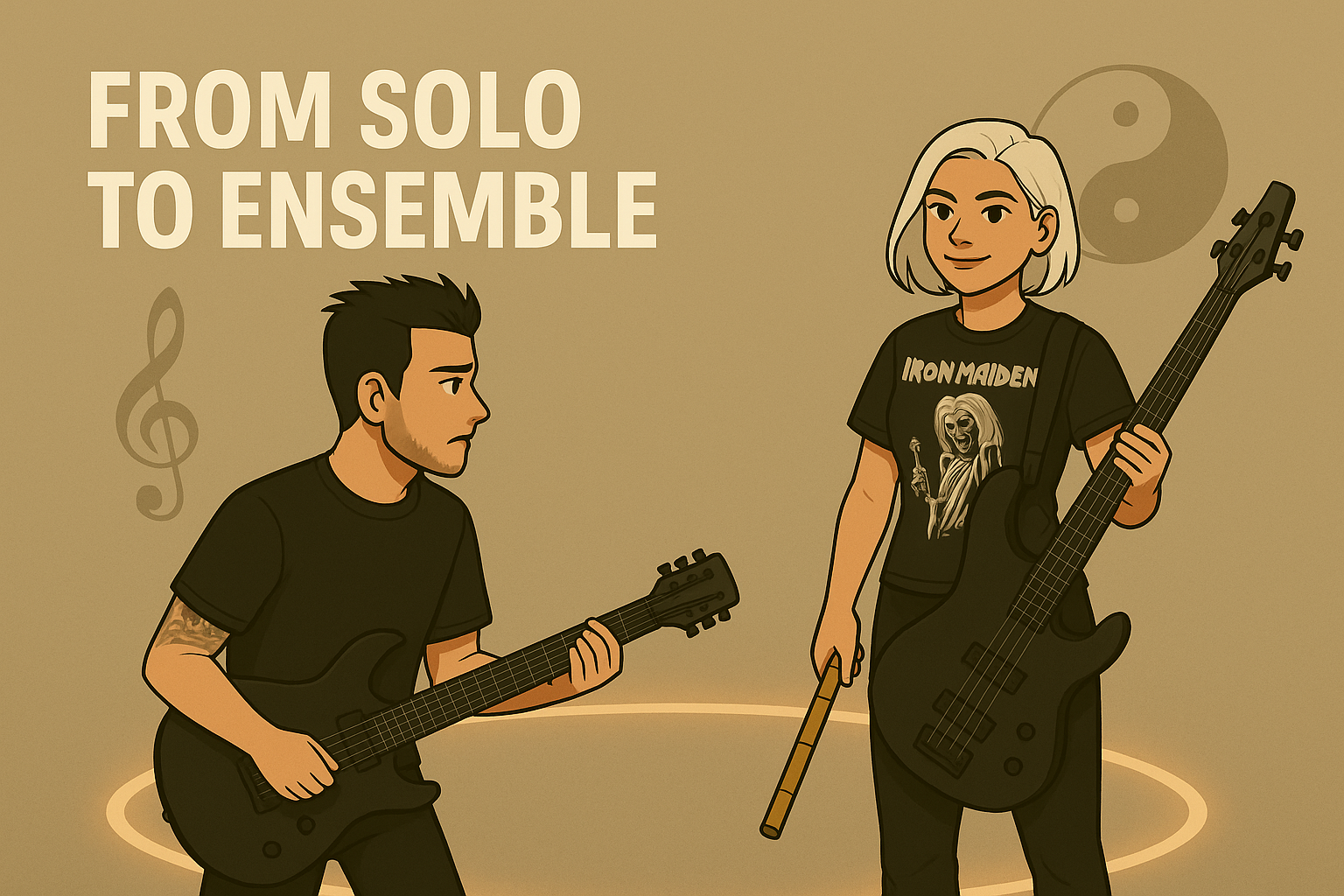
From Solo to Ensemble: The Courage to Step Into the Circle
Stepping into your first jam feels like stepping into your first sparring circle — your timing breaks, your confidence shakes, and your ego begs you to run. But on the other side of that fear is something far greater: connection. Music was never meant to be a solo sport. Say yes to the circle, yes to the mess, yes to the magic that only appears when you play with others, not just for yourself.
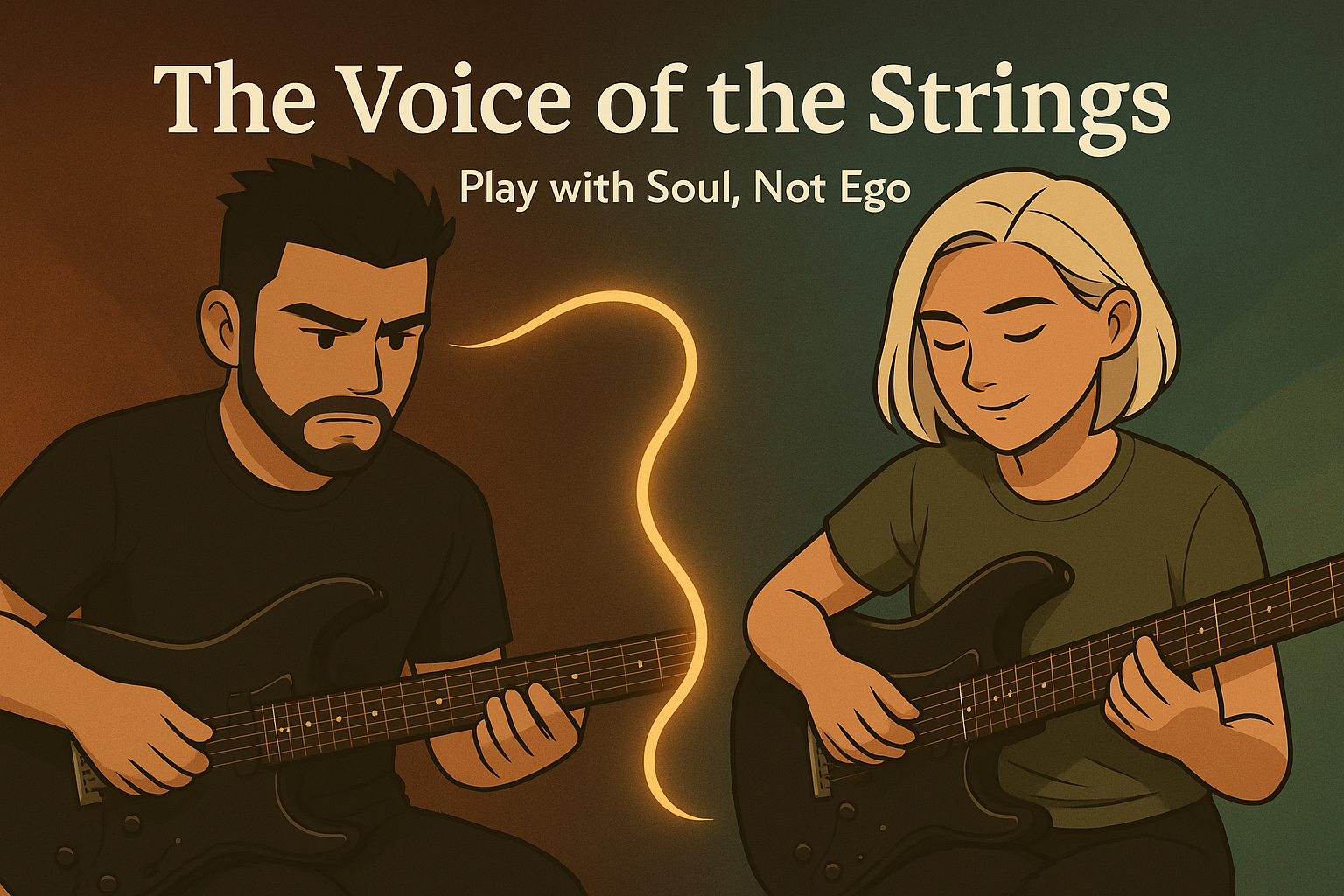
The Voice of the Strings: Playing Guitar with Soul, Not Ego
Most guitarists learn how to play the right notes.
Far fewer learn how to say something with them.
Just like in martial arts, technique is only the gateway — the real magic comes from intent, presence, and the courage to let go of perfection.
Your guitar isn’t a machine. It’s a voice.
And it’s time to let it speak, not just recite.
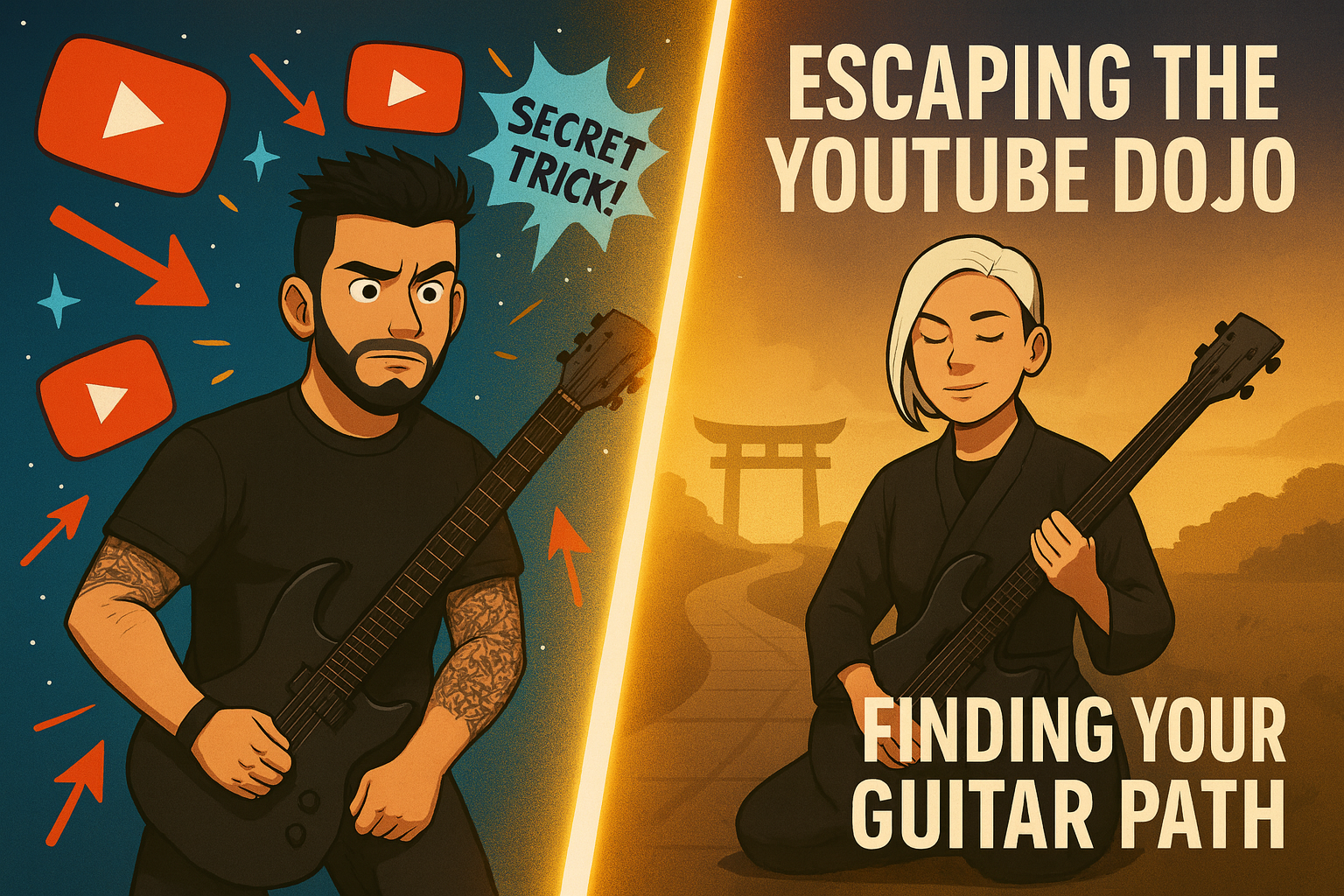
Escaping the YouTube Dojo: Finding Your Guitar Path
We’ve all fallen into it: the YouTube Dojo.
One “secret trick” video leads to another… and another… and suddenly you’ve practiced for an hour but learned nothing.
It’s the illusion of progress — motion without direction.
Just like hopping between martial arts schools every week, jumping from random guitar tutorials keeps you busy, not better.
The real breakthroughs happen when you stop chasing hacks and start walking a path.
In Part 8, we cut through the noise and explore how to build clarity, structure, and momentum in your guitar journey — with the same discipline you’d bring to the dojo.
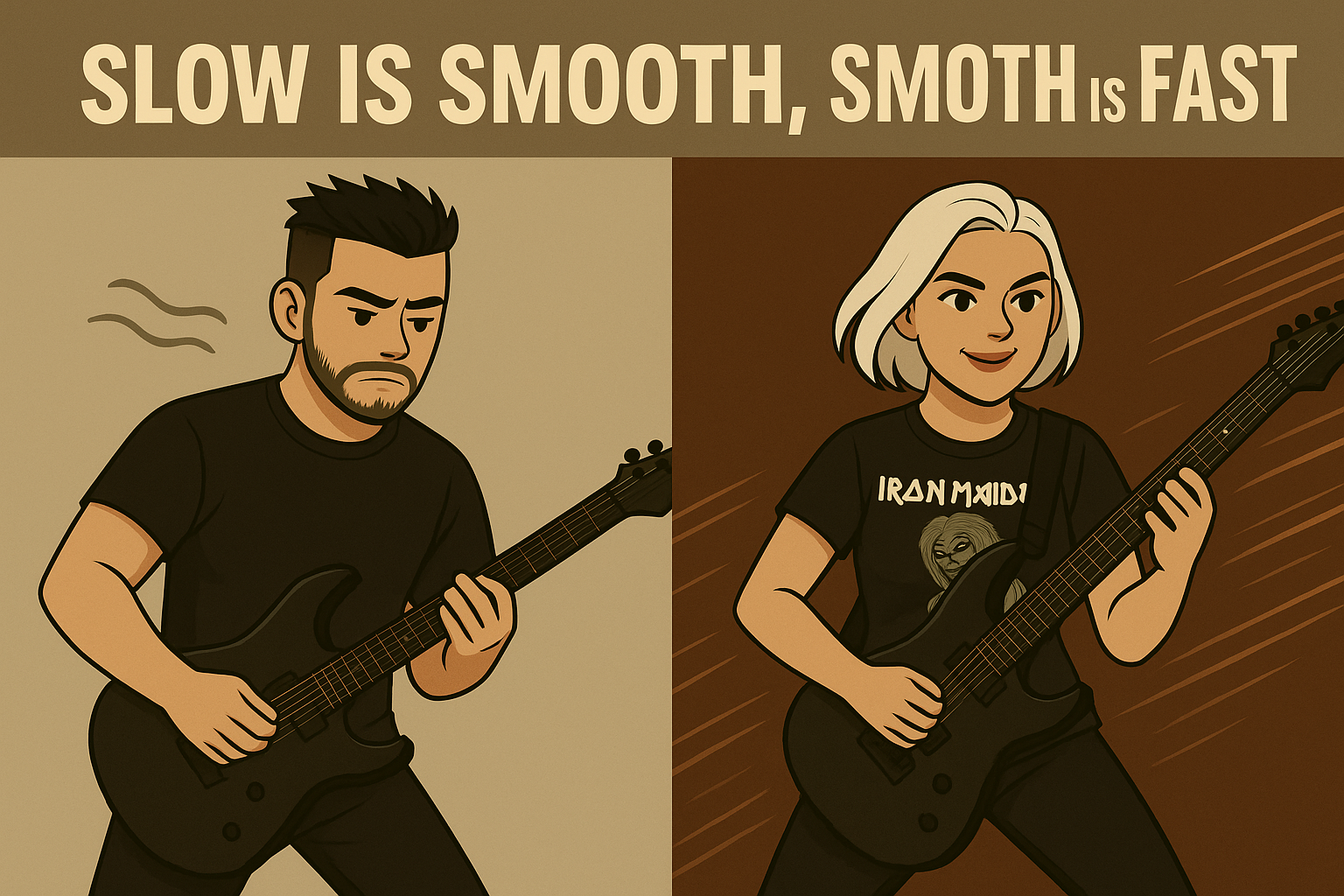
Slow is Smooth, Smooth is Fast: Guitar Lessons from the Sword
Everyone wants to play fast.
But both the sword and the guitar teach the same truth:
speed isn’t something you chase — it’s something that appears when the movement is smooth.
Start painfully slow.
Make the motion beautiful.
Add tempo like adding weight in the gym.
Because in music and in combat:
Power comes from calm.
Speed comes from smoothness.
Show up slow today.
You’ll be fast tomorrow.
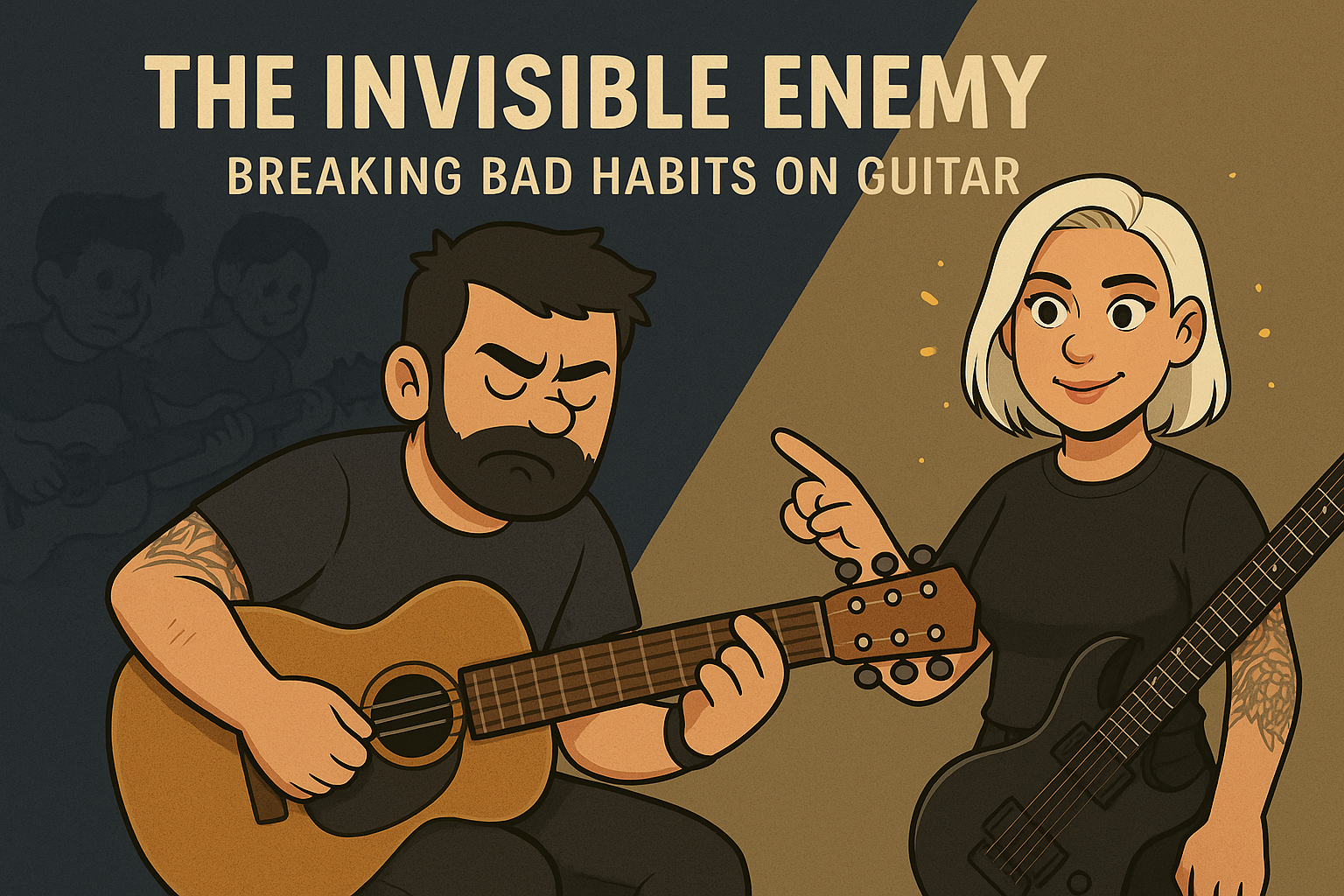
The Invisible Enemy: Breaking Bad Habits on Guitar
The worst habits aren’t loud — they’re invisible.
A little tension here, a sloppy motion there, and before you know it, you’re fighting your own body.
Like a swordsman leaving his guard open, every unnoticed flaw becomes an invitation to struggle.
The cure isn’t punishment — it’s awareness.
Shine light on what you do without thinking, and mastery begins.
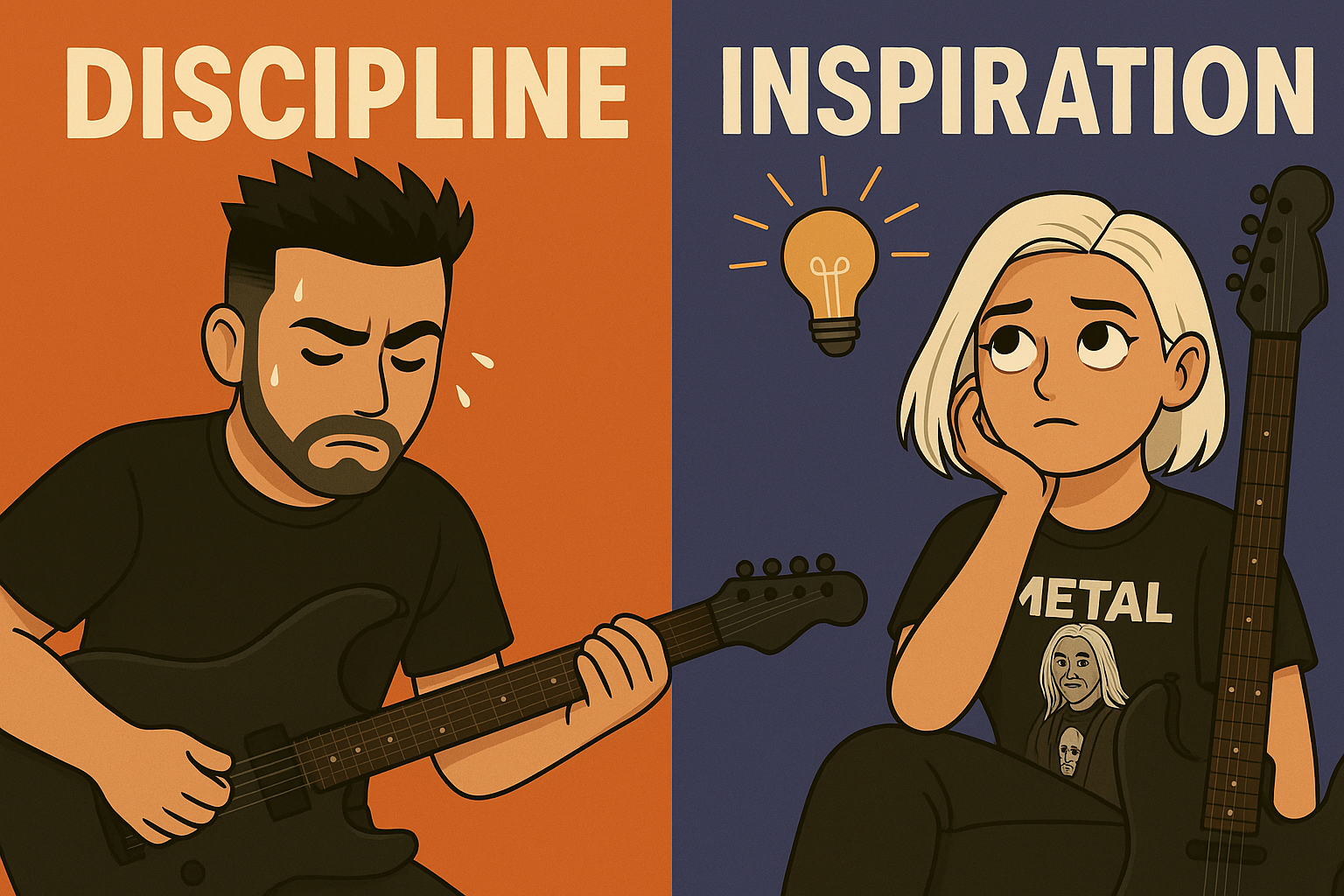
Discipline Beats Inspiration: Practicing Guitar The Warrior’s Way
Most musicians wait for inspiration — warriors don’t.
You can’t build skill on moods. You build it on rhythm.
Show up small, but show up daily.
Because discipline isn’t the opposite of freedom —
it’s the path that makes freedom possible.
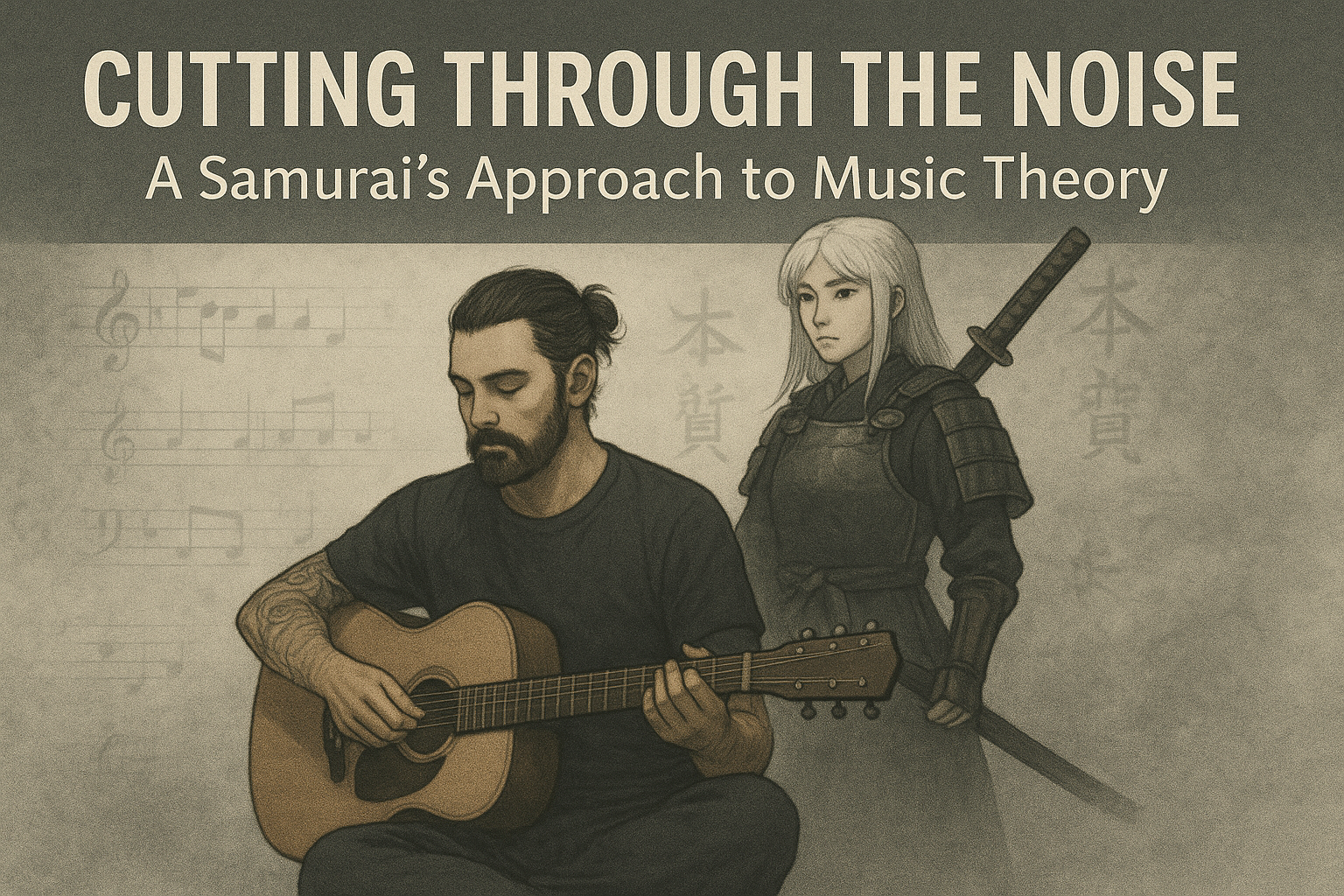
Cutting Through the Noise: A Samurai’s Approach to Music Theory
Most musicians drown in theory they never use.
Scales, modes, formulas — the noise keeps growing.
But Musashi taught: see the essence, discard the extra.
Music isn’t about knowing everything.
It’s about cutting through — until only sound remains.
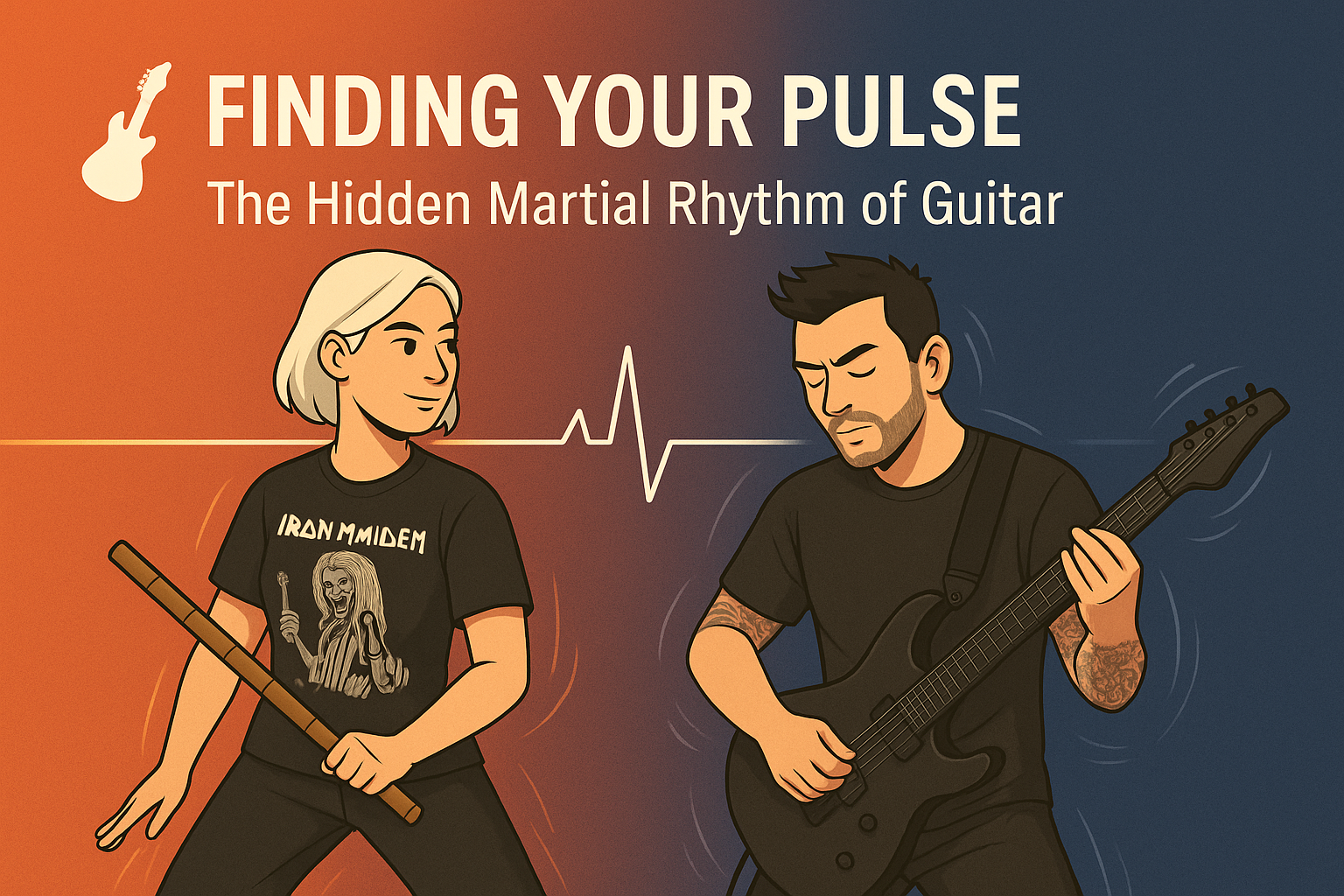
🎸 Finding Your Pulse: The Hidden Martial Rhythm of Guitar
Most guitarists struggle more with rhythm than notes — because rhythm isn’t something you see, it’s something you feel.
Just like in kenjutsu or Balintawak, where breath and footwork control timing, your guitar playing needs the same internal pulse.
Count, tap, breathe — and let rhythm become the heartbeat of your music.
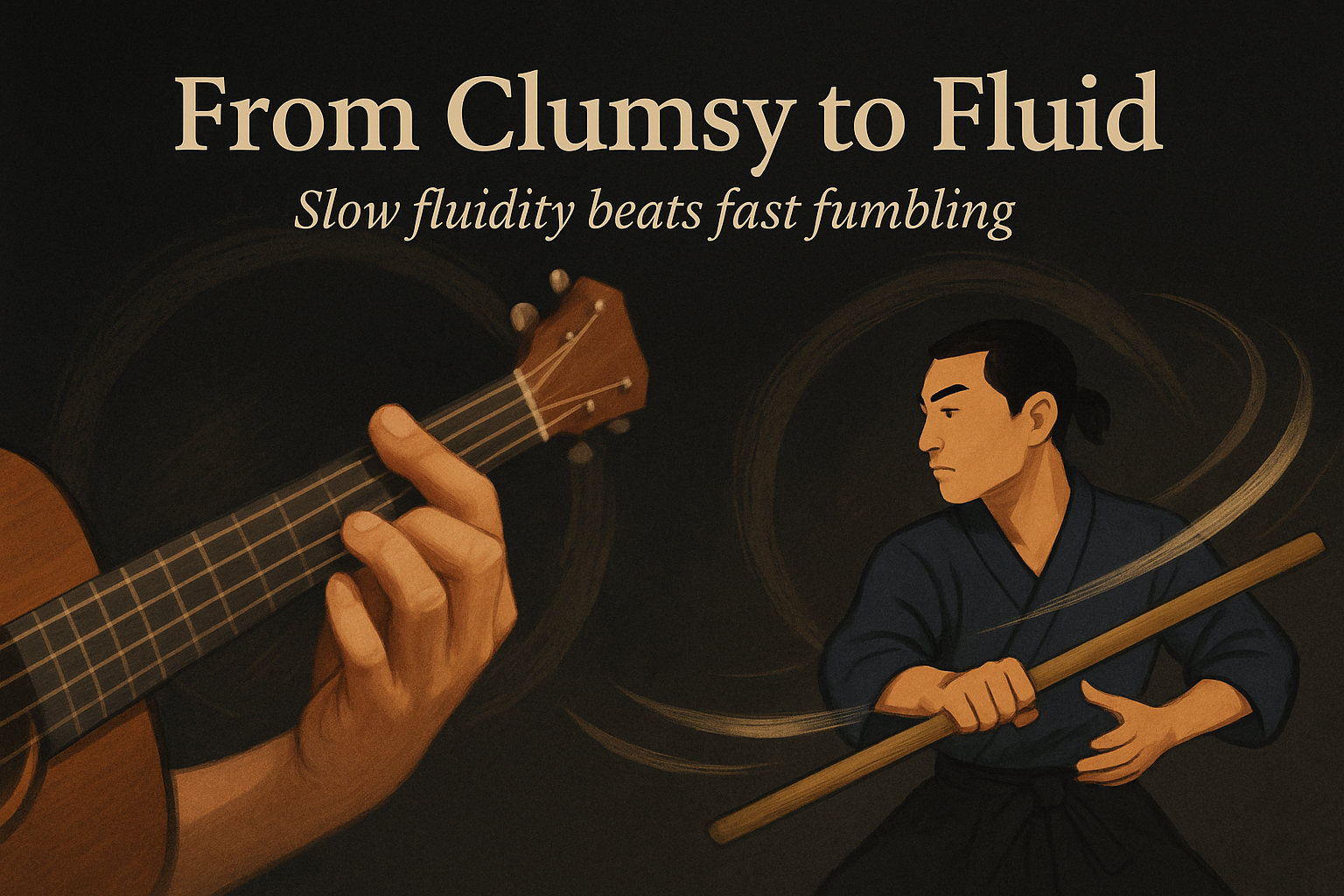
From Clumsy to Fluid: Guitar Chords as Moving Meditation
At first, everything feels impossible.
Your fingers stumble, the chords buzz, and your mind races ahead of your hands. But just like a kata in martial arts, repetition turns stiffness into grace. When you let go of hurry and focus on presence, movement becomes meditation — and fluidity begins to appear on its own.
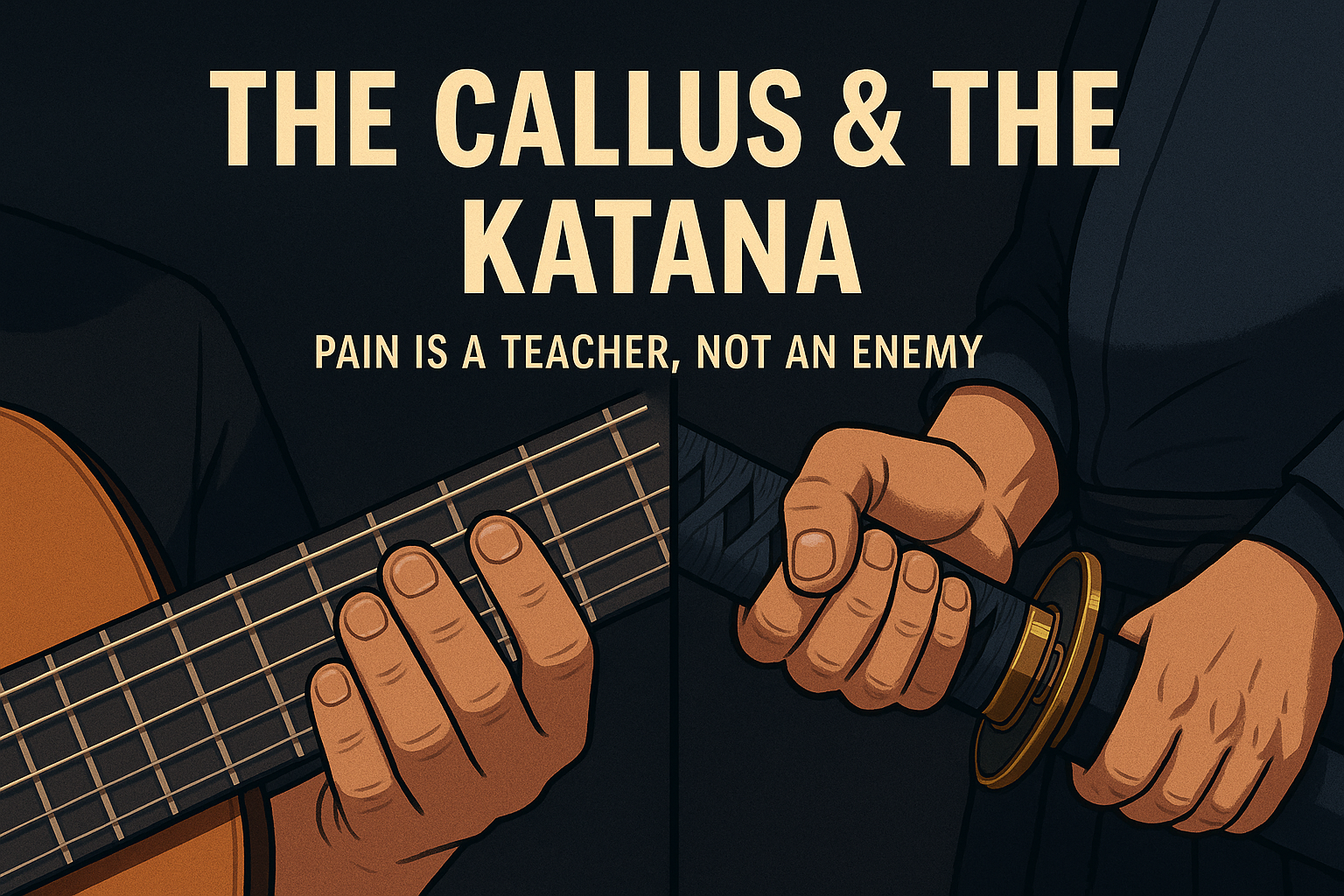
The Callus and the Katana: Why Pain is a Teacher, Not an Enemy
Pain isn’t the enemy — it’s the curriculum.
From the calluses of a guitarist’s fingertips to the bruises of a martial artist’s training, discomfort marks the path of growth. The key is learning to see pain not as punishment, but as proof you’re evolving.
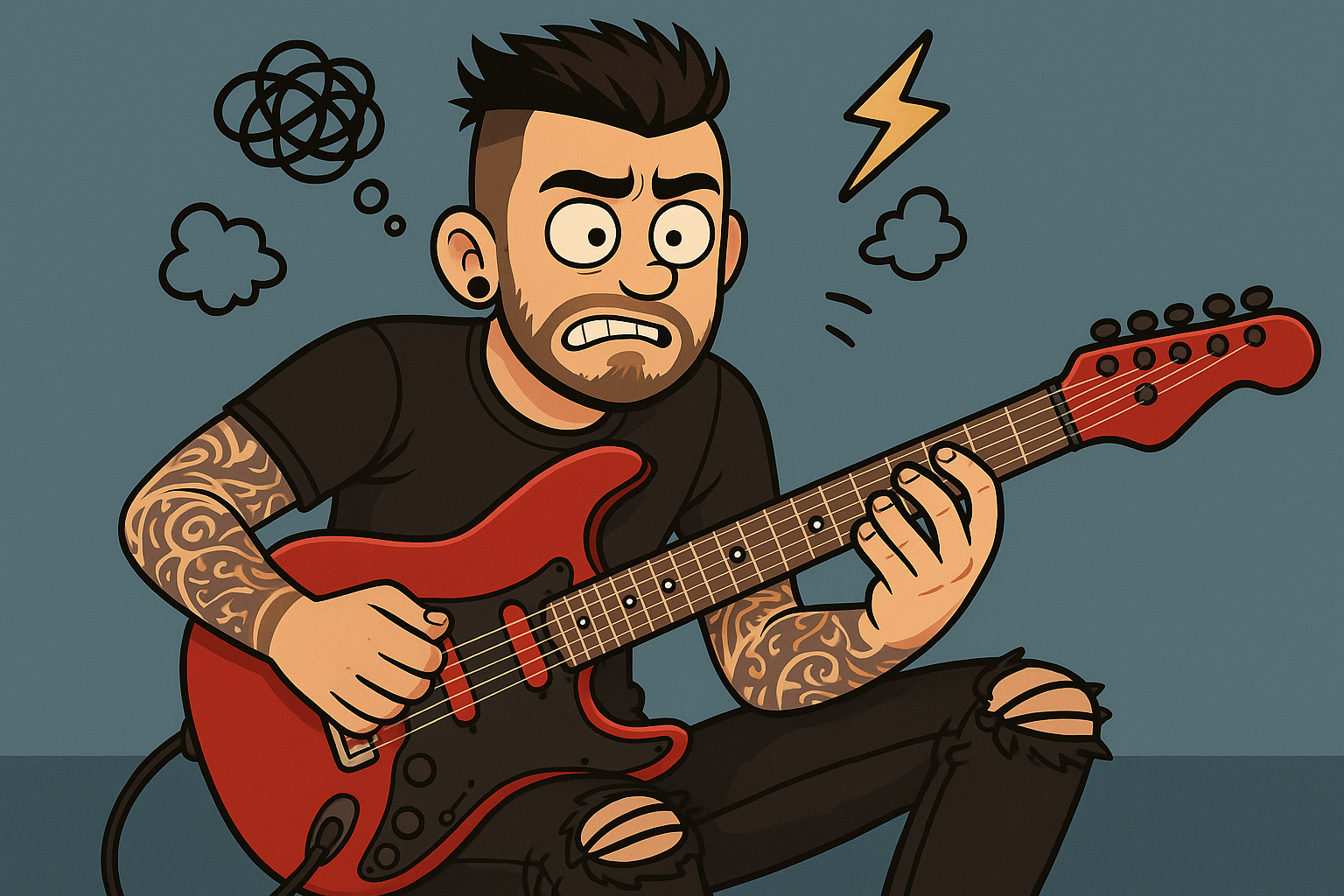
Finger independence drills that actually work (And why most don't)
It’s not about grinding out thousands of repetitions.
It’s about how present you are when you practice. Notice which finger tends to collapse, which one drags behind, which one resists pressure. Slow practice with awareness builds independence faster than speed drills ever will.